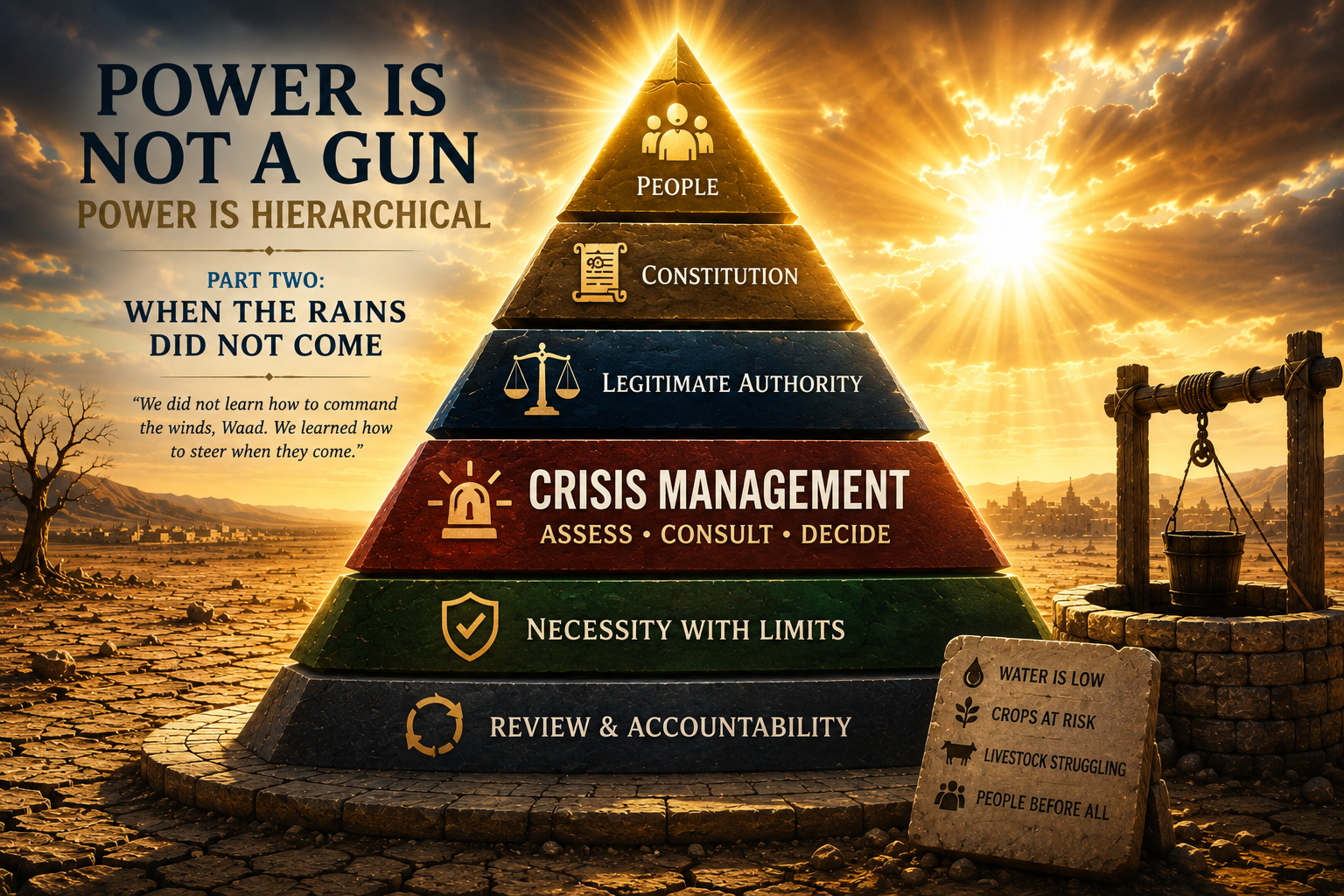
When the rains did not come , a strong state cannot choose every storm that comes. It can learn how to steer when the storm arrives.
The Year the Sky Changed
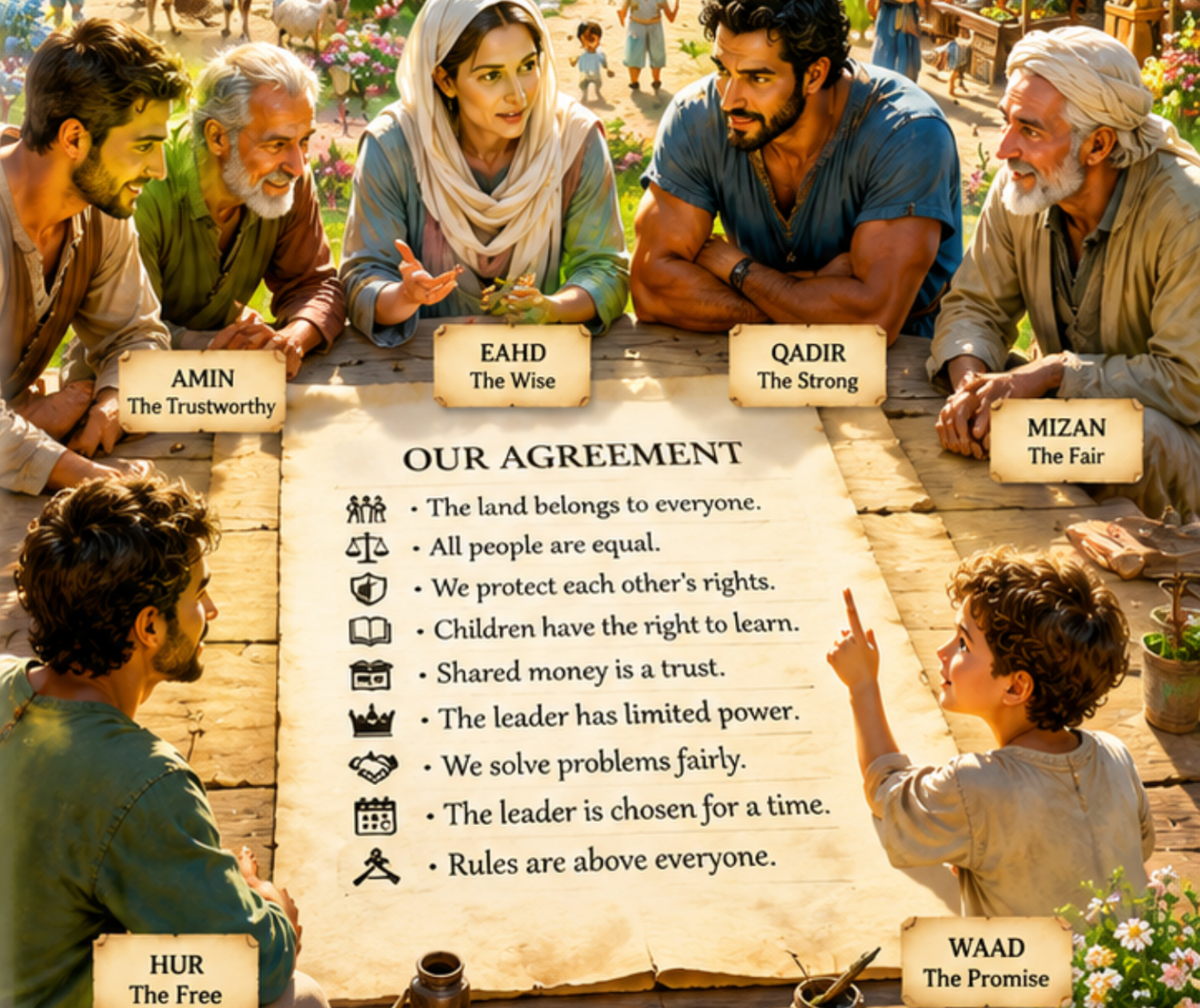
Years had passed since Waad had said one small word: “Write it down.” The people of the ship had written their covenant, chosen Amin to govern under it, and built a life around it. Farms spread. The market grew. Children filled the school. The land that a storm had once thrown them upon had become home.
Then came the year when the rain did not come.
At first, it was not a crisis. The rains were late. Clouds finally gathered, and people came outside to watch. They crossed the sky and disappeared without leaving a single drop.
Grass dried. Crops weakened. Livestock searched the yellowing ground.
“As long as the well has water,” people said, “we will be fine.”
One morning, Hur lowered the bucket. The rope went farther than usual. When the bucket returned, it was only half full.
“The water is falling,” he told Amin.
Amin used the powers he already had: conserve water, organise access to the well, reduce irrigation. The people complied. The sky did not. What could be managed yesterday was becoming something else.
A Choice Between Losses
“Stop irrigation,” Qadir said.
A farmer turned on him. “Then my crop dies.”
“And if we do not stop it, the well may die.”
“What about the animals?” someone asked.
A mother holding her child said, “What about us?”
Real crises do not always offer a choice between right and wrong. Sometimes they place two losses before you and ask you to prevent the greater one.
Qadir faced Amin. “Decide.”
“I do not have an open power to stop people using their land,” Amin replied.
Qadir struck the table. “Are we going to sit here reading the Constitution until the well runs dry? If the power we gave you is not enough, then we give you enough power.”
Hur looked at him. “How much?”
“Whatever he needs to save us.”
“I want us to survive too,” Hur said. “But I want us to remain free when we do.”
Qadir did not answer. Both men were defending something worth saving: survival and freedom.
Before the Decision
“Then make a decision about the water,” Qadir said.
“Not until I know what is really happening,” Amin replied.
Qadir pointed at the dry earth. “Can you not see it?”
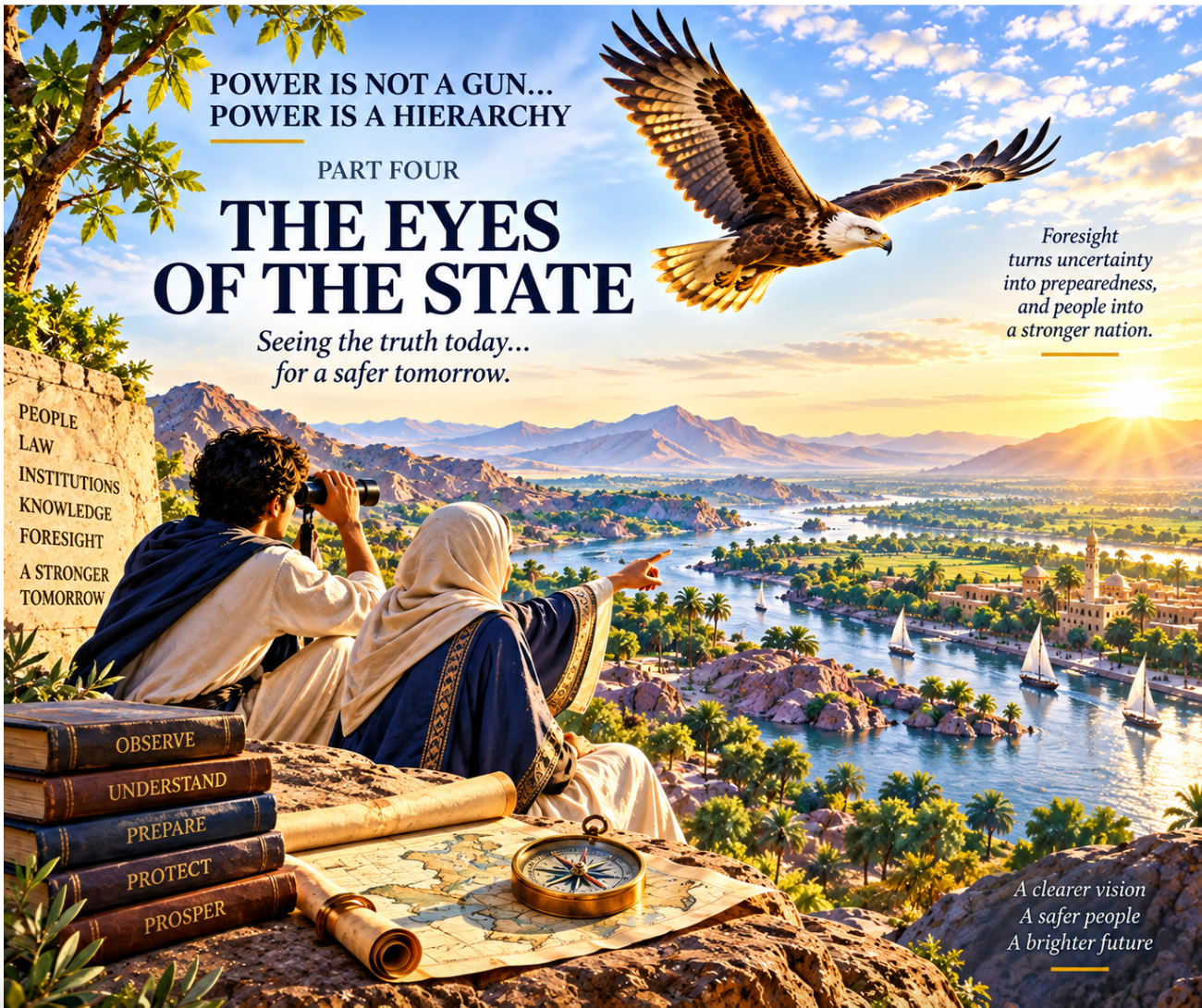
“I can see the drought. What I see with my own eyes is not enough to decide the fate of everyone.”
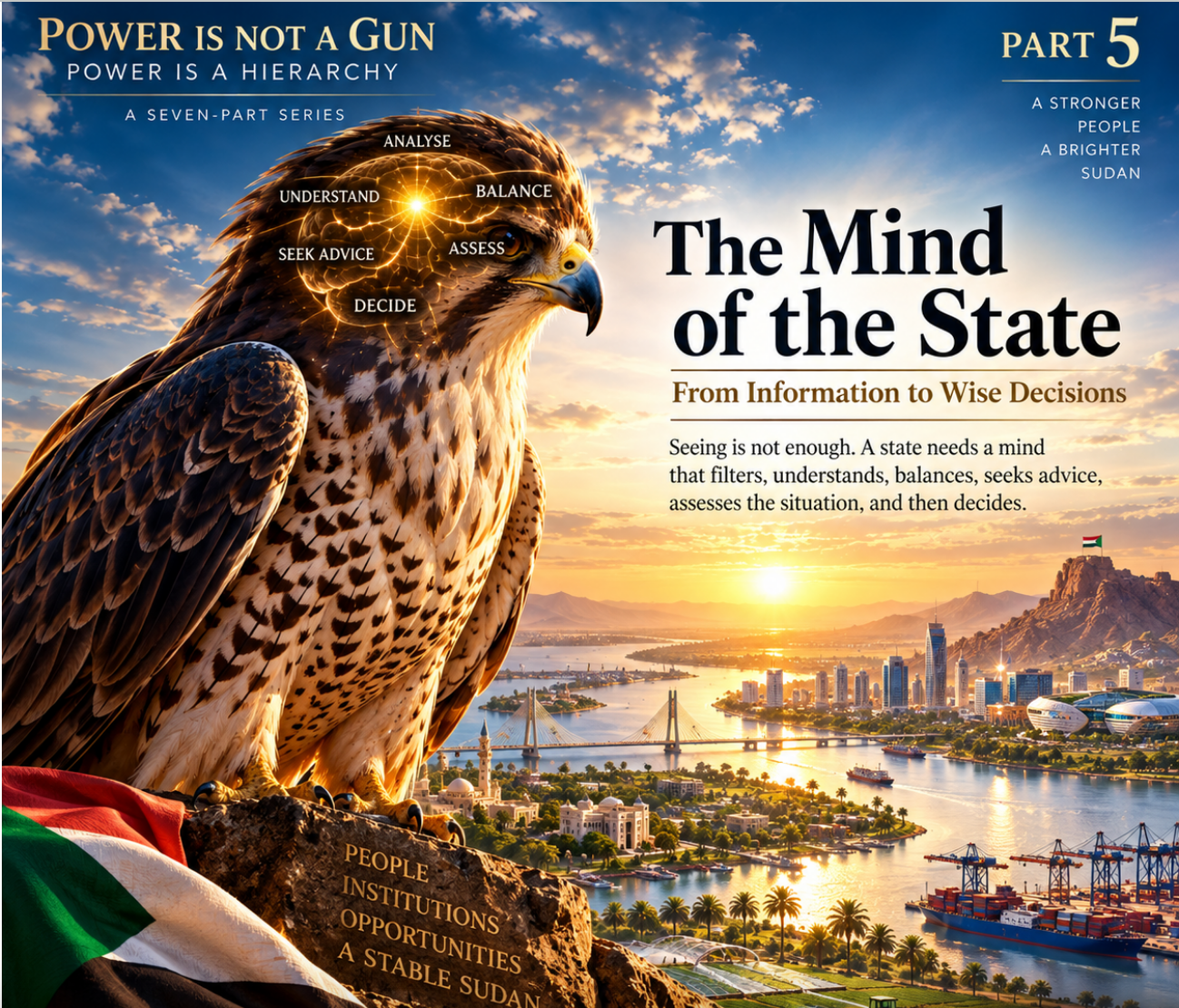
Amin wanted answers. How much water remained? How fast was the level falling? What did families need? What about children and the sick? How much went to crops and livestock? What would happen if irrigation stopped? What would happen if it did not? What alternatives existed?
Qadir frowned. “Who can answer all that?”
“Those who know,” Amin said.
He quickly gathered people who understood water, farming, livestock, health and food, together with people representing the families who would live with the consequences.
“Do not tell me how each of you can save yourselves,” Amin told them. “Tell me how we save everyone.”
They measured the well, calculated daily use, checked food stores, and compared human, agricultural and livestock needs. The drought stopped being a cloud of fear. It became a situation they could examine.
Where are we now? What threatens us? What happens if we do nothing? What choices do we have? What will each choice cost?
Mizan looked at the figures. “Now we know where we stand.”
Before a State tries to change reality, it must first understand it.
They had made an assessment of the situation: facts, knowledge, risks, choices and consequences brought together before power was used.
Waad asked Amin, “Why do we need all this before you decide?”
“Because power gives me the ability to carry out a decision,” Amin said. “It does not tell me which decision is worth carrying out.”
But Where Does Exceptional Power Come From?
The plan was clear. The harder question remained.
“Some of what we need to do goes beyond the powers you gave me for ordinary days,” Amin said.
“Then take the power,” Qadir replied.
Amin shook his head. “I do not take powers you have not given me.”
Mizan asked, “Who gave you your power in the first place?”
“The people.”
“Then if exceptional power is needed, it must come from the same source.”
A Constitution for Difficult Days
They opened their Constitution. It spoke of rights, authority and limits. But it did not say enough about what should happen when an exceptional danger threatened the community.
Waad looked through the window at the remains of the old ship.
“We, of all people, should have thought about things we do not expect. Did our life here not begin with a storm we never expected?”
Ahd smiled. “The winds do not always blow as ships would wish.”
Then she added, “We cannot predict every crisis. But we can agree on how our State should act when one comes.”
So they added an emergency framework: when danger was truly exceptional; who could authorise additional powers; why those powers were needed; how far they could go; how long they could last; and how they would be reviewed as circumstances changed.
“Give Amin the power to do whatever is necessary,” Qadir said.
Hur shook his head. “It is the word ‘whatever’ that worries me.”
Ahd said, “Necessity may permit the exceptional.”
Qadir smiled.
“I have not finished,” she said. “Necessity is measured by what is necessary.”
Necessity may open the door to an exception. It must not tear the door from its hinges.
Stopping irrigation for a time did not make the farms Amin’s property. Rationing water did not give him the right to deny it without reason. Exceptional powers needed for the drought could not quietly become permanent powers.
So they gave Amin what the danger required — for the danger, and only for as long as it required.
The drought did not give Amin power. The people did, through their Constitution.
A Decision Is Not the End of a Crisis
The measures began. Water stopped flowing to some fields. Livestock allowances were cut. Families were rationed. Nobody was pleased. Qadir himself lost animals.
Days later, the emergency group met again. The well was measured. Consumption had fallen more than expected. Some crops could now be saved. Amin changed the measures.
Waad was puzzled. “If the first decision was right, why change it?”
Ahd replied, “It was right for the situation we understood then. The situation has changed.”
A wise decision does not argue with reality when reality changes.
Waad understood. Crisis management was not one command issued once. You understand. You assess. You decide. You act. You watch. Then you return to the facts and adjust.
When the Clouds Returned
Weeks later, clouds gathered again. This time they did not pass in silence. Rain fell lightly, then harder. Children ran outside. Adults simply stood and watched the sky.
The drought did not disappear in a day, but the greatest danger receded. And when the emergency ended, so did the need for exceptional power.
Waad stood beside Ahd near the well.
“Can our Constitution stop the drought from coming again?”
She laughed. “No.”
“Then what did we learn?”
She pointed towards the remains of the old ship.
“We did not learn how to command the winds, Waad. We learned how to steer when they come.”
Waad looked back at the men and women who had helped Amin. The people who understood water returned to their work. The farmers returned to their fields. Those who knew health returned to the sick.
He thought for a moment.
“If their knowledge helped save us when the well was failing… why do we wait for a crisis before bringing them together?”
Amin looked at Ahd. Then at Mizan.
This time, the problem was no longer the water.
The question was larger:
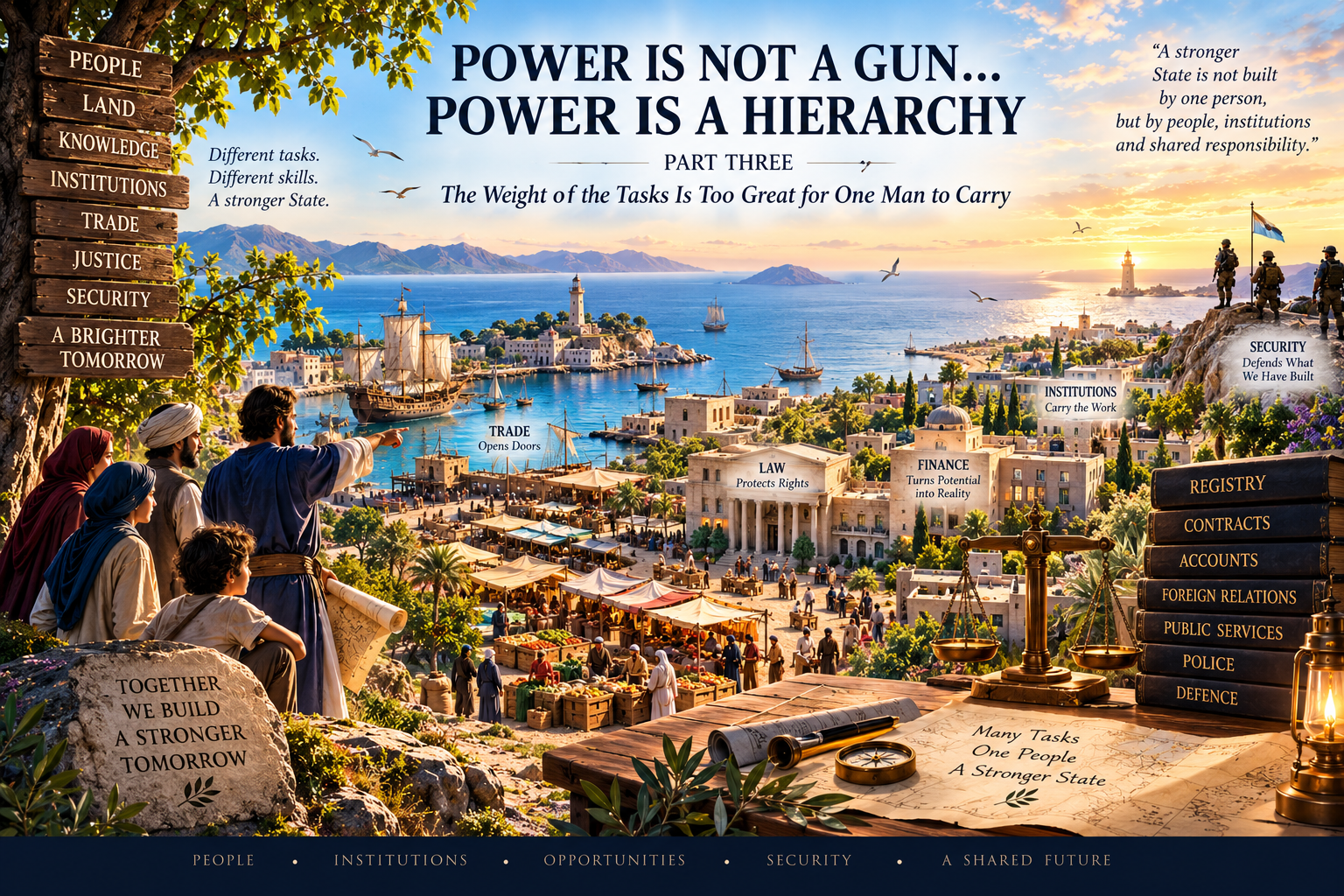
How can a State preserve knowledge, responsibility and specialised work — not only in an emergency, but every day?
END OF PART 2
To be continued…