
The Offer That Went No Further
Ships entered and left the harbour. Markets were full of traders, and fields stretched beyond the hills. Since Amin’s death, the State had changed leaders without stopping its work.
One morning, a delegation returned from across the sea. Its members had helped develop the port, but now they proposed extracting and managing the resources beyond the mountains.
“And what will our people receive?” the Council President asked. The visitors promised money, equipment and jobs.
“Who will control the resources after extraction?”
“We will manage and market them throughout the agreement.”
The Council consulted economists, lawyers, land specialists and traders, then declined the proposed terms.
“You may not receive another opportunity,” the visitor warned.
“Nor will we recover our resources if we fail to value them,” the President replied. The delegation departed. The matter appeared closed. It was not.
When the Harbour Began to Choke
Weeks later, ships began arriving late. First one, then two; soon entire consignments were cancelled. Warehouses emptied and prices climbed.
“This money used to buy twice as much grain!” a customer complained.
“And I cannot buy stock at the old price,” the seller answered.
“Where is the Council of State?”
The Council summoned port officials. Companies had changed schedules or cancelled shipments, but no one could yet explain why. The President ordered an investigation and honest public updates. Prices, however, rose faster than answers arrived.
When Trust Began to Fray
Citizens gathered outside the market and the Council.
“We elected them to protect our interests, not leave us queuing for food!” one man shouted.
A woman said, “I need food for my children.”
Shops closed and workers stopped work.
“People are losing faith in the Council,” Qadir observed.
“But we still do not know why the ships stopped coming,” Waad replied.
“Families cannot wait for an explanation while they go hungry.”
Waad could not deny it.
When the Market Lost Its Safety
The crisis spread. Warehouses were robbed, traders attacked, and lorries delayed their journeys for fear of violence. Police struggled to contain the growing disorder.
The Council President summoned the police chief.
“Can you restore security?”
“We are doing everything possible, but our present capacity is not enough.”
“What do you need?”
“More officers, equipment and cooperation to reopen the supply routes.”
The Council acted, but events were moving faster.
The Force That Arrived
The following morning, military units secured key roads, public facilities and threatened warehouses.
“At last someone can protect us,” a trader said.
Theft declined and markets reopened. Yet the ships remained delayed and prices high.
“They restored security,” Qadir said. “Why has life not returned to normal?”
“Because security was never the whole problem,” Waad answered. “The goods, contracts and unexplained delays remain.”
When Authority Changed Hands
As the crisis continued, military leaders announced they would temporarily administer State affairs to prevent further disorder. Some Council functions were suspended and decisions passed from civilian institutions to the new leadership.
Some welcomed the move; others questioned what had become of the Council they had elected.
Security improved, but economic, commercial and legal questions still required specialised institutions.
The question was no longer simply who could protect the State. It was how the State could function through all its institutions.
The Chair
The elected Council President met the commander.
“You helped protect people in difficult circumstances. But institutions must return to their proper responsibilities.”
“We fear the disorder may return,” the commander replied. “Some believe we are better placed to manage this period.”
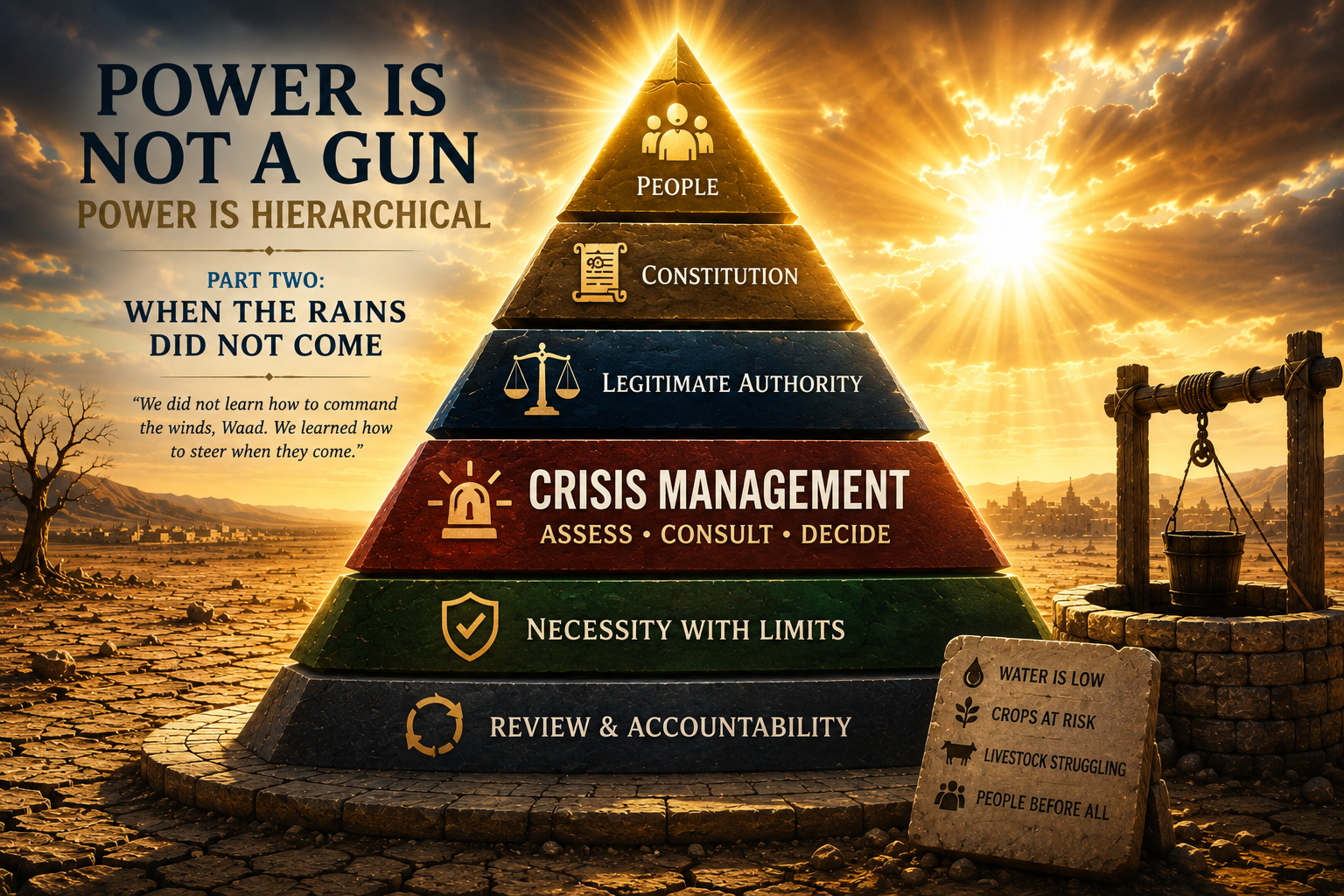
“They may express that view. Yet success in performing one institution’s duties does not confer the powers of another. Every institution has responsibilities and limits defined by the Constitution and law.”
“We proved we could protect the country.”
“And that matters. But a State is strong not when one institution replaces another, but when they work together within their respective mandates.”
The commander was not persuaded. The seat of power remained disputed.
A Clue from Across the Sea
Specialists reviewed shipping records and contracts. Some ships had been ready to sail when instructions to delay arrived; other cargoes were cancelled despite being prepared for dispatch.
Correspondence suggested links between some decisions and negotiations over the resources beyond the mountains.
“So someone deliberately weakened our trade?” Waad asked.
“We have grounds to investigate,” Mizan said, “but must establish who issued the instructions and what each party knew.”
“And the protesters?”
“Their suffering was real, whether or not they knew the cause.”
The roots of the crisis stretched further than the market had revealed.
Offers After the Calm
Fresh delegations offered food, financing, machinery, port development and resource agreements. The new leadership accepted some proposals and rejected others.
Reviewing them together, Mizan noticed that one granted priority harbour access, another broad resource-transport rights, and a third long-term dependence on outside maintenance.
“But they bring money and equipment,” Qadir argued.
“They may bring genuine benefits,” Mizan replied. “But have we asked what these agreements, taken together, will make us become?”
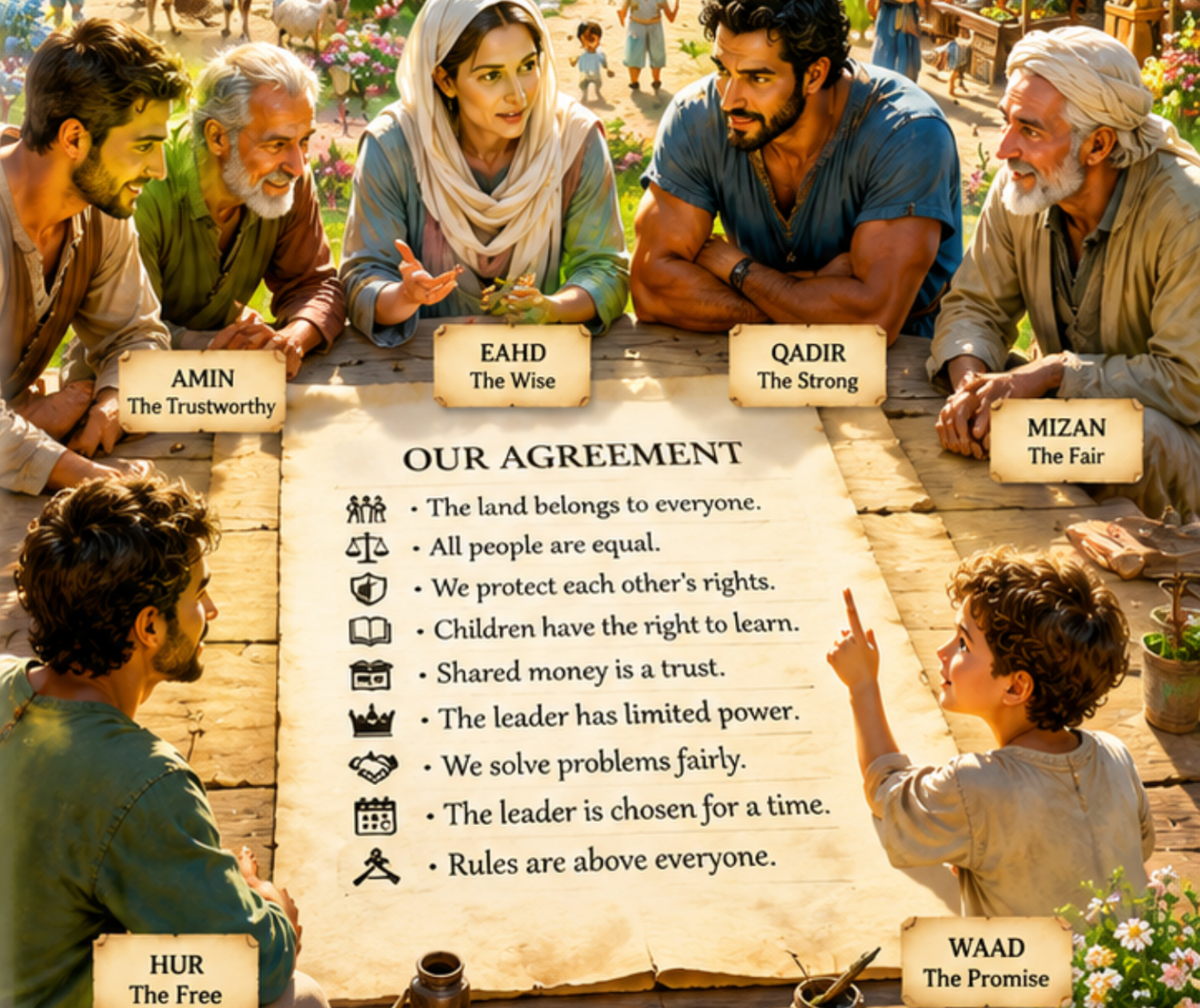
Waad remembered Amin’s words: “I do not only want to know what an agreement gives us today. I want to know what it makes us tomorrow.”
Two Choices
Then the harbour’s operating system failed, disrupting unloading and cargo records.
“We protected the port,” the commander said. “Why are ships still waiting?”
“Because the problem is technical,” the port manager answered. “We have two choices: a foreign company offering a rapid repair under an expensive long-term contract, or local engineers who know the system but need equipment and cooperation.”
“Which is faster?”
“Probably the foreign company.”
“Which is better?”
“Speed alone cannot decide. We must ask what we will pay, learn and own when the contract ends.”
“Can we combine them?”
“Yes, if outside help strengthens national capability rather than creating permanent dependence.”
Expertise That Stays
The commander summoned an engineer who had worked at the port since its construction.
“Can you restore it?”
“We can solve much of the problem, but need the port authority, communications, finance, legal advisers and foreign relations.”
“All of them for one port?”
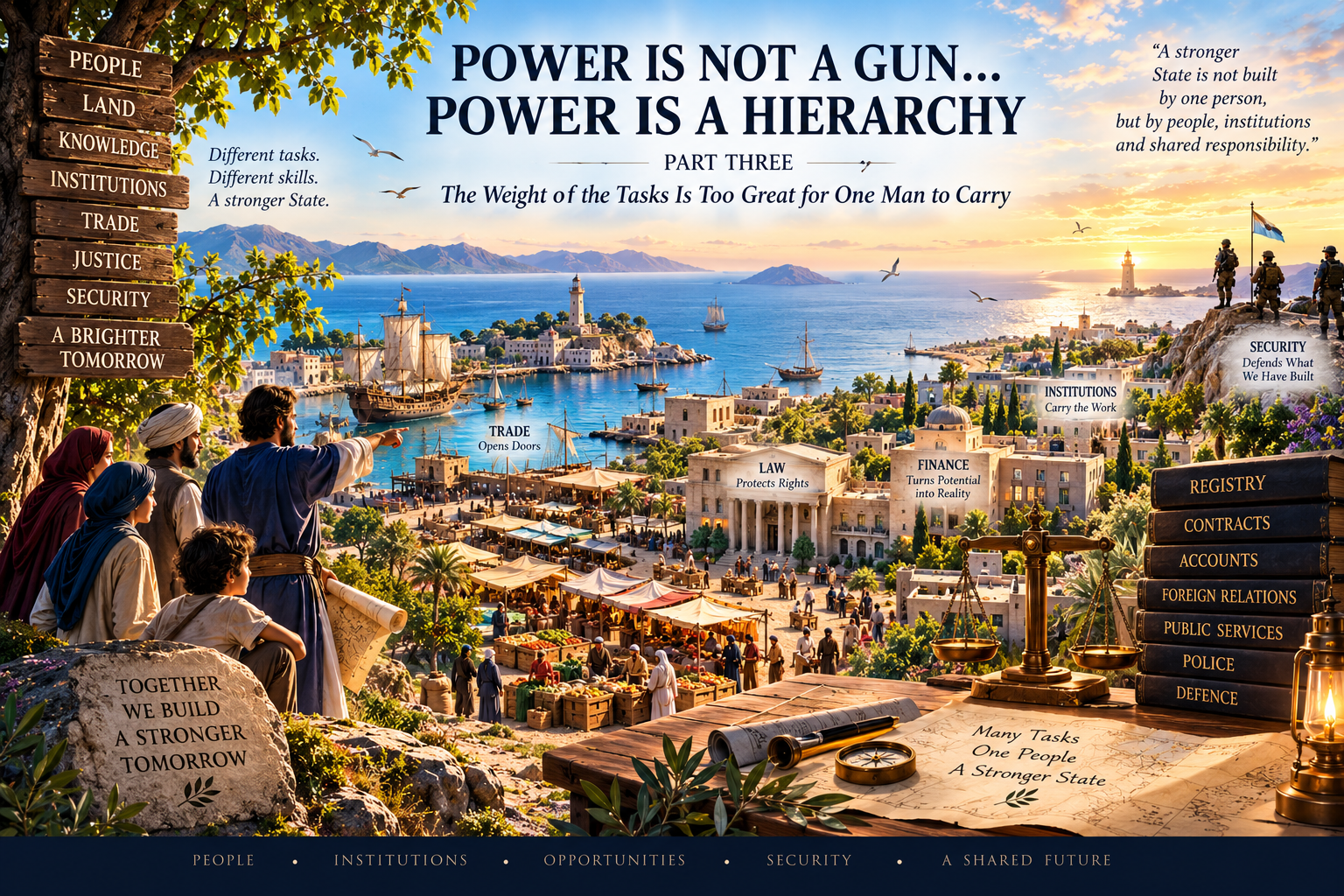
“Sir, a harbour is more than ships and docks. It is trade, finance, communications, contracts, workers and relationships with the world.”
He added: “The armed forces can protect a harbour from attack. They cannot, by themselves, make it operate.”
The commander understood: defending a place and running it were different tasks.
The Office of the Presidency
“But I am responsible for administering the State now,” the commander said.
“That is why you need its institutions,” Mizan answered. “The Presidency itself is an institution. No President, however powerful, is the State.”
He continued: “The Presidency, the armed forces, the judiciary and every other institution have their own constitutional and legal powers.”
“Who brings them together?”
“The constitutional system, which defines who decides, implements, oversees and answers for decisions.”
“So our problem is not that we lack strength?”
“We tried to run an entire system through one institution’s capacity.”
The Hardest Decision
The commander met his senior officers.
“We took responsibility when the country approached chaos. Why leave office?” one asked.
“Because our institution was never established to perform every other institution’s duties,” another answered.
“We should remain until every crisis ends,” a third insisted.
“When would that be?” the commander asked. “Has any country ever lived without crises?”
He studied the reports. “We protected roads and the harbour. Yet prices stayed high, ships remained delayed and foreign agreements grew more complex. Not because our institution is weak, but because those matters require other expertise.”
“Do you propose abandoning the State?”
“No. Returning to our rightful place within it. Defending our country does not mean owning the right to govern it. We do not need the President’s chair to fulfil our duty.”
The Chair That Belonged to No One
The commander met the elected President and representatives of the institutions. Arrangements were announced to end the exceptional military administration, restore constitutional functions and allow the armed forces to continue defending the country and its sovereignty.
On the appointed day, the commander entered the Council chamber and paused before the President’s chair.
“This chair never belonged to Amin, his successor, or anyone who could reach it by force. It belongs to the institution of the Presidency, whose powers and limits are set by the Constitution.”
He looked around. “We protect the State when we protect its institutions—not when we replace them.”
He returned to his duties. Neither his standing nor the armed forces’ strength was diminished. The crisis remained, but institutional balance began to return.
When the Falcon Regained Its Balance
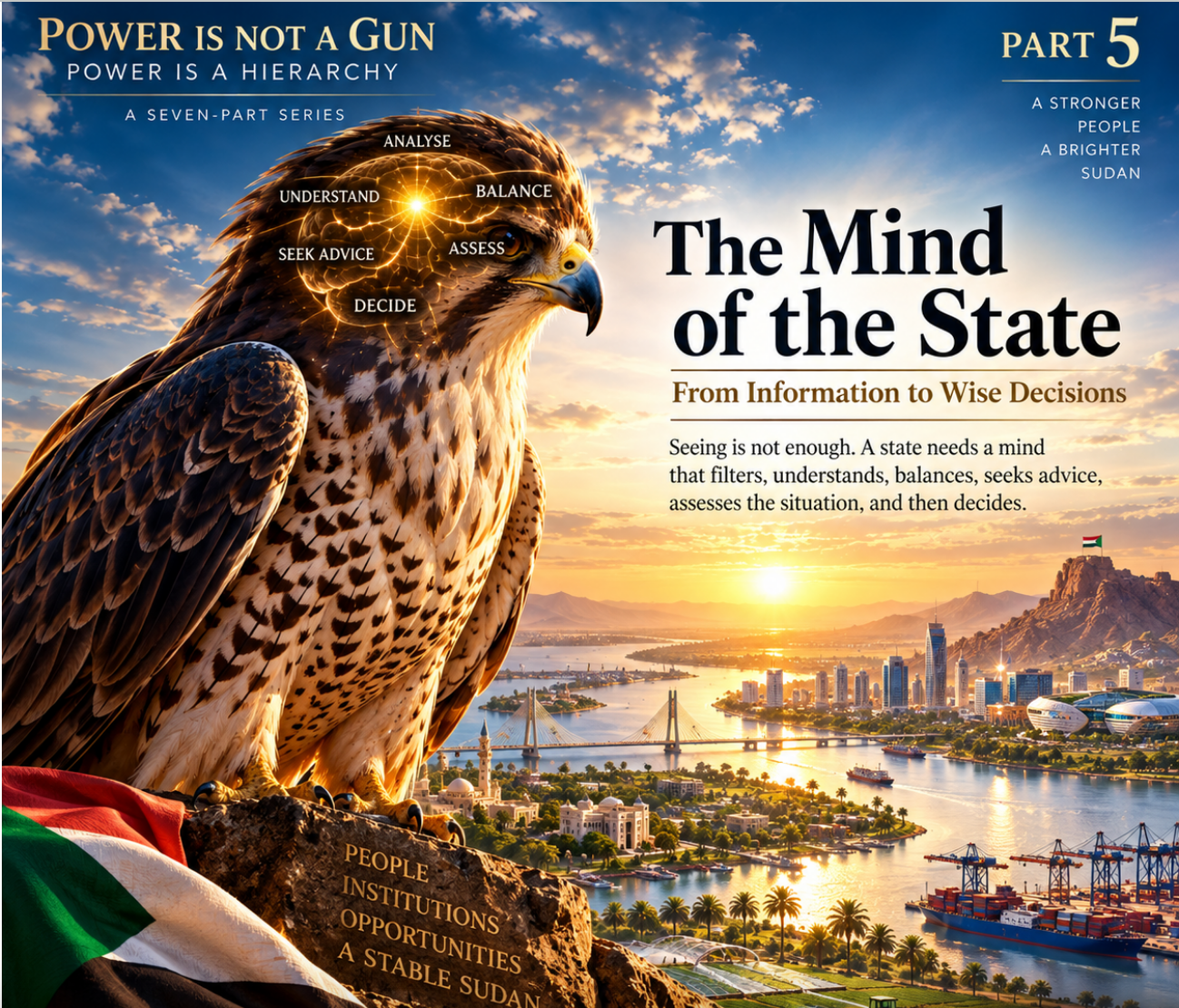
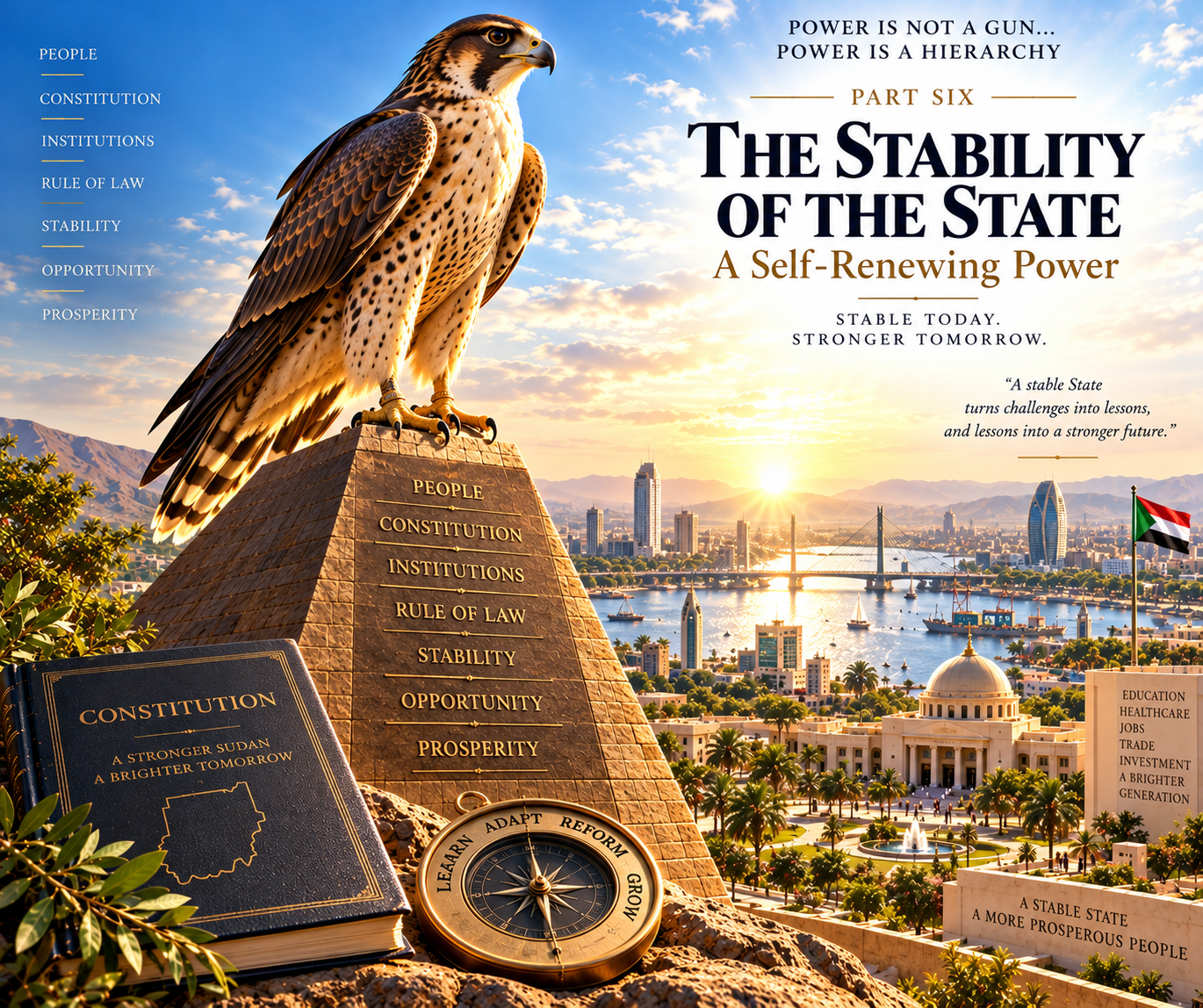
Waad watched the Sudanese Falcon standing on the pyramid. It spread its wings, turned its head and planted its feet, talons gripping the stone.
“It has lost none of its strength,” Waad told Ahd. “But its parts are working together again.”
“What had gone wrong?”
“The balance between their functions.”
Looking towards the Council and the city, Waad said: “A State is not strong because its most powerful institution governs the others. It is strong when every institution performs its own duties.”
“That,” said Ahd, “is institutional balance.”
The Talons
Waad looked at the falcon’s talons.
“I thought the talons were the armed forces.”
“The armed forces are an institution,” Ahd said, “part of the wing representing the State’s institutions.”
“Then what are the talons?”
“The tools and mechanisms through which institutions perform their functions and protect the State’s interests and sovereignty, each within its proper authority.”
“Like a mechanic’s tools, an engineer’s instruments, a dentist’s equipment—or a pen and a set of scales?”
“Exactly. Each tool has its purpose, and each institution its responsibilities. A State is not strong merely because it owns tools, but because it uses them properly and in harmony with its other institutions.”
“So powerful tools are not enough?”
“An institution must also know when to use them and where its limits lie.”
The Final Question
The Sudanese Falcon stood proudly atop the pyramid. Its wings were strong, eyes open, mind alert, legs steady and talons firmly gripping the stone.
Waad asked: “What ensures that each institution respects its mandate and does not use its tools beyond the limits of its authority?”
“That the State’s institutions remain vigorous, disciplined and in balance,” Ahd replied.
“Vigorous? How do they remain so?”
Ahd looked at the falcon. “Something nourishes the State’s arteries and flows through its whole body, giving life to its institutions and keeping their strength in harmony.”
“What is it?”
She did not answer. She pointed towards the falcon’s chest.
Its heart was beating. With each beat, blood flowed through its body, reaching its wings, eyes, mind, legs—and talons.
Waad had learned the purpose of every part. Now he understood that something must connect them and sustain their life.
He looked again at the falcon’s chest.
And the heart was still beating…
PART EIGHT — THE HEART OF POWER: THE RULE OF LAW