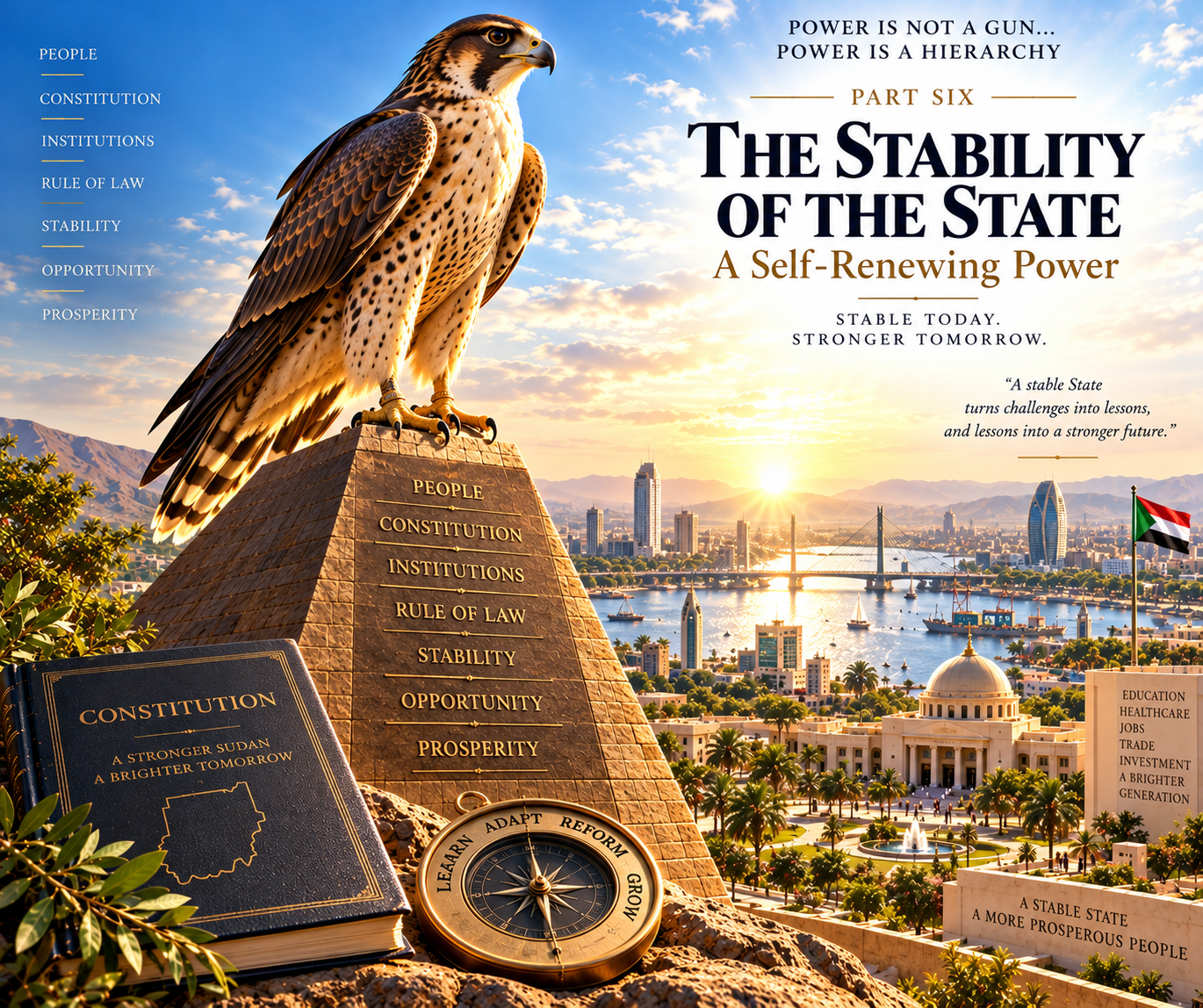
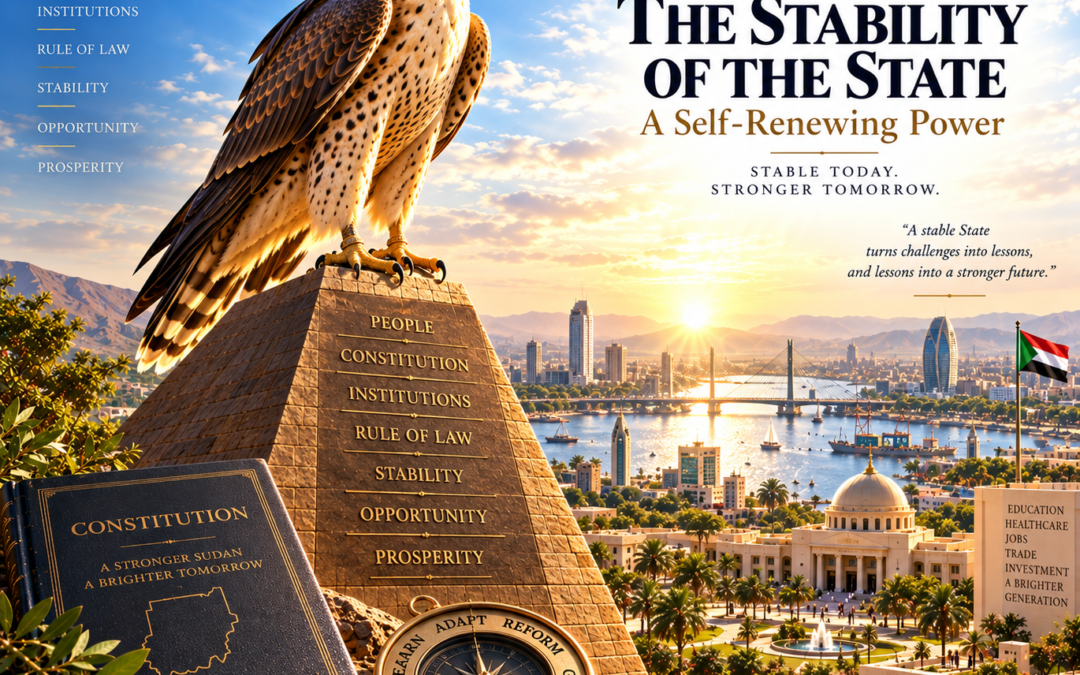
“A Self-Renewing Power | The Sudanese Falcon was coming in to land.”
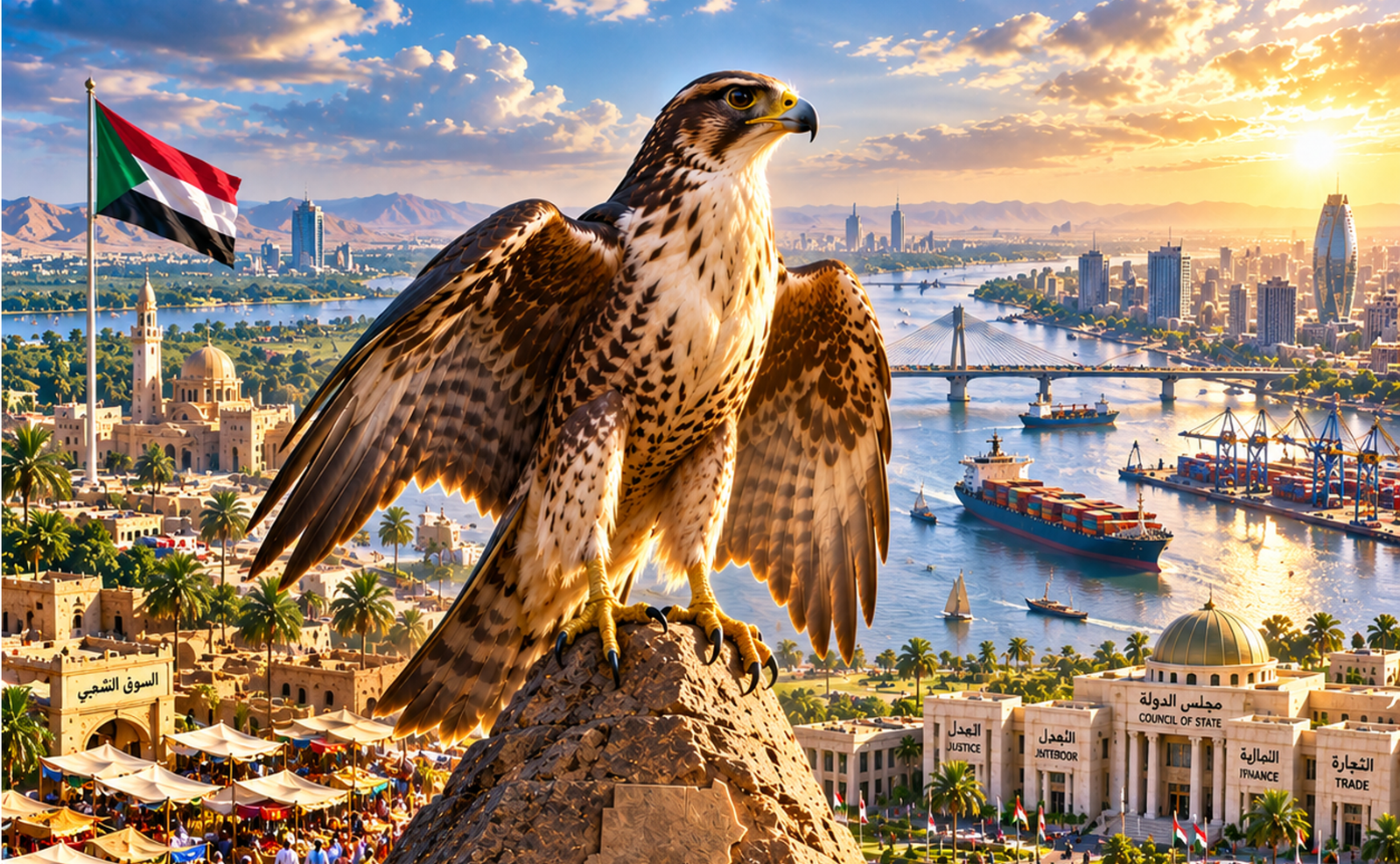
Its wings spread wide as its legs reached towards the rock. The moment its feet touched down, its legs bent slightly under the force of the landing, then straightened.
A strong wind swept across the rock.
The falcon leaned into it, shifted one foot and regained its balance.
Waad watched closely.
“It moved… yet it remained steady.”
“Because standing firm does not mean standing still,” Ahd replied.
“And its legs?”
“They absorb the force, adjust to it and keep the falcon balanced.”
“So stability is a kind of strength?”
Ahd smiled.
“Yes. A flexible strength that absorbs shocks.”
Before Waad could ask what she meant, a man came running from the market.
His face was pale.
He stopped before them, struggling to catch his breath.
Then he spoke.
“Amin is dead.”
When the State Was Shaken
Waad ran to Amin’s house.
People were gathering outside. Qadir stood silently by the door. Mizan was inside.
Amin’s chair was empty.
“I was with him yesterday,” Waad whispered.
No one answered.
Amin had been more than the man in charge. He had been with them since their first ship came ashore.
Together, they had faced drought, fear and pirates. He had watched their community grow.
The people needed time to grieve.
But the State could not stop.
Who Decides Now?
Within hours, a messenger arrived from the harbour.
“A ship is waiting for permission to enter.”
Then came someone from the land registry, a message from across the sea, and financial papers awaiting approval.
One question began to spread.
“Who decides now?”
One name was suggested.
Then another.
Voices rose.
But the people remembered something.
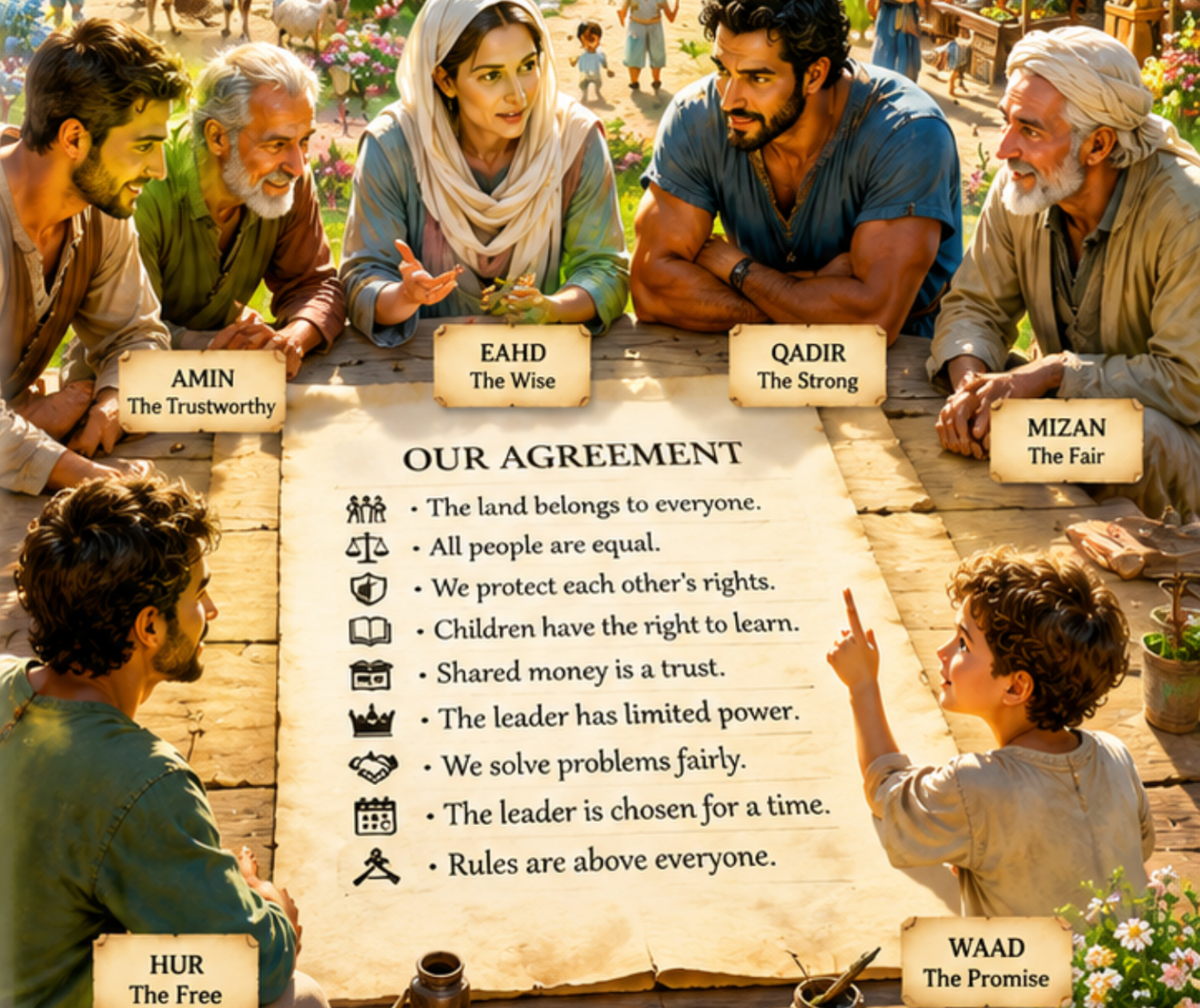
They had already agreed on what should happen when this day came.
Now was the time to honour what they had written into their Constitution.
They opened the document and read:
If Amin is unable to carry out his duties because of illness, death or incapacity, the Council of State shall, by a majority of its members, appoint a person to administer the affairs of the State temporarily for a period not exceeding one year, pending the transfer of authority in accordance with the Constitution.
Qadir looked up.
“Then we already have a way forward.”
Waad looked towards Amin’s empty chair.
“But he never told us who should succeed him.”
“He did not need to,” Ahd replied.
“Why?”
“Because a State that depends on a departing leader to choose his successor remains dependent on that leader. We agreed on the rules long before we needed them.”
Waad looked again at the Constitution.
“So the Constitution is the safeguard of the State’s stability?”
“Yes,” Ahd said. “But a safeguard works only when people honour it, especially when breaking the rules seems easier than following them.”
At the very moment a struggle for power might have begun, the Constitution began to work.
The Man Was Gone. The State Remained.
The Council of State met.
Its members discussed, disagreed and voted.
They appointed someone to administer the State during the transitional period.
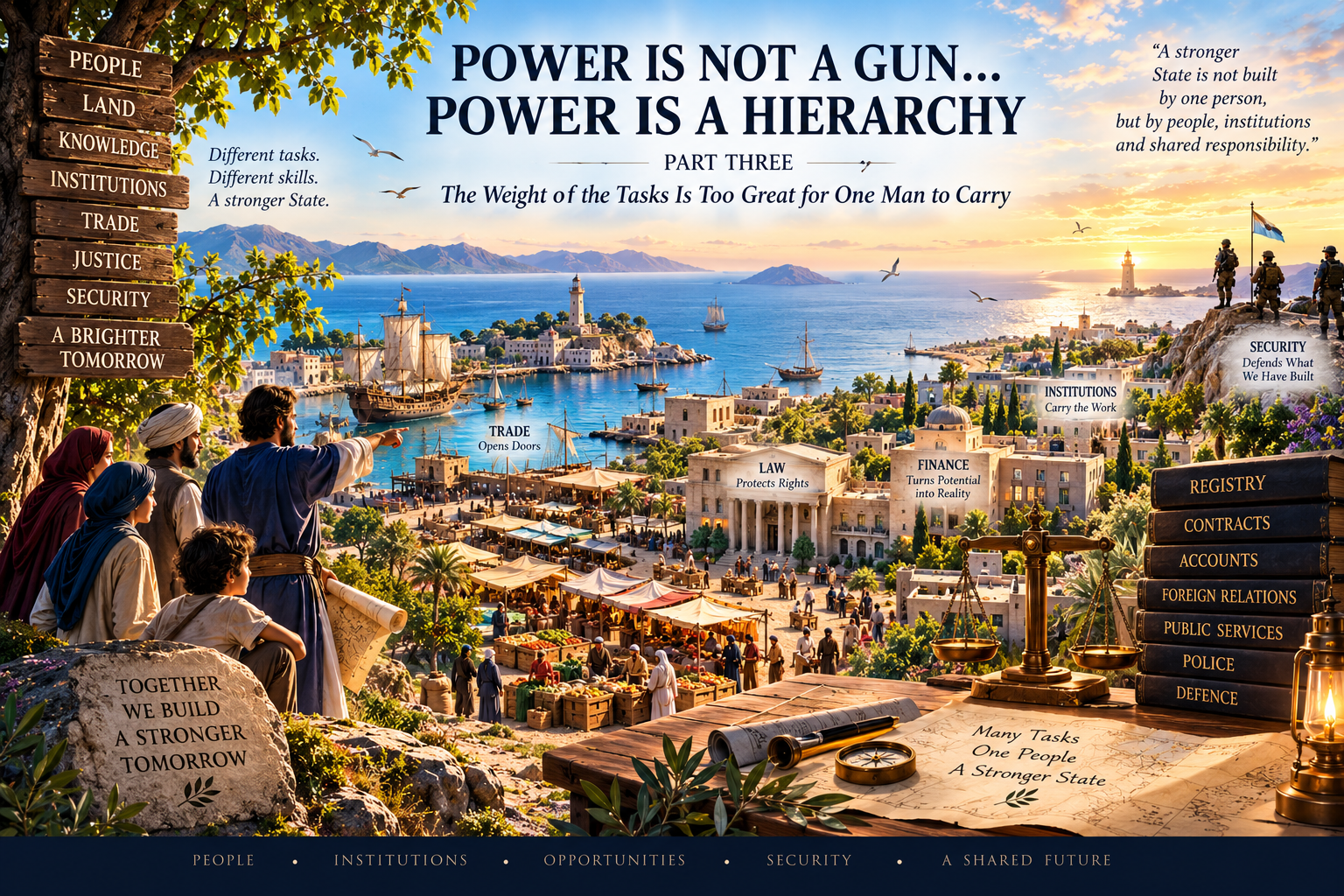
The following morning, the market opened. Children went to school. Ships entered the harbour. The land registry continued its work, as did the police and those dealing with partners overseas.
Grief remained.
But the institutions had not stopped.
Waad looked around him.
“Amin is gone… but the State is still here.”
When the Past Came Knocking
A few days later, the delegation that had negotiated with Amin over the new port returned.
Its leader carried the preliminary agreement.
“We are ready to begin work,” he announced.
“Amin signed it,” Qadir said. “Then let us proceed.”
But Mizan asked to see the document.
“Isn’t his signature enough?” Qadir asked.
Mizan replied:
“The question is not simply who signed it, but what was signed, under what authority, and what the State actually agreed to.”
They examined the agreement.
Some matters had been settled. Others remained open. The agreement could not take full effect until further procedures were completed and the Council of State had given its approval.
“But Amin gave us his word,” the delegation leader insisted.
“And we respect the word of our State,” the acting leader replied.
Then he added:
“That is precisely why we will honour what our State has agreed to — no more and no less.”
After the delegation left, Qadir suggested starting negotiations again.
“The man who negotiated with them is dead.”
Mizan looked at him.
“Amin died. The State did not.”
They continued the process from where it had stopped, neither abandoning commitments already made nor inventing obligations that had never been agreed.
In the Name of Stability
The months passed.
The transitional year was drawing to a close.
One Council member said:
“The acting leader has done well.”
Another added:
“Trade is improving, and the port project is moving forward.”
A third suggested:
“Why replace him now? Let him stay another year.”
Qadir nodded.
“That might be better for stability.”
Waad looked up.
“For stability?”
“Yes. Why change something that is working?”
Waad thought for a moment.
Then asked:
“If we break the rules for transferring power in the name of stability, what will protect stability the next time?”
“It is only one more year,” someone replied.
Mizan spoke.
“His success does not change the limits of his authority.”
Another member asked:
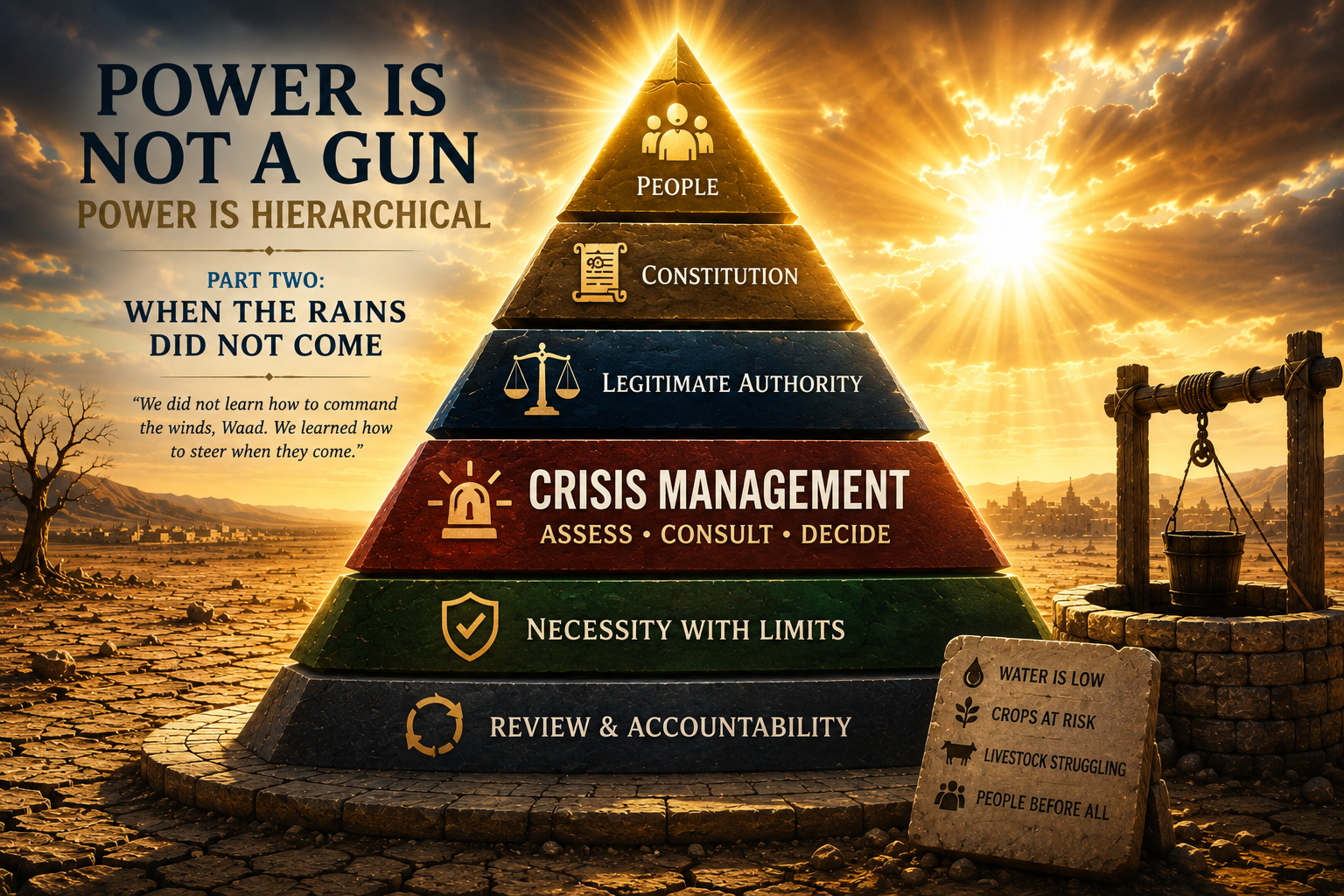
“What about necessity?”
Ahd answered:
“Necessity may justify an exception permitted by law. It does not create powers the law has never granted.”
Waad looked around the room.
“Then stability is not about keeping the same person in power. It is about keeping the rules in place when the person changes.”
When the Choice Returned to the People
The year ended.
Citizens went to the polls and elected the members of the Council of State.
The newly elected Council met and chose one of its members to serve as President, exercising the powers granted by the Constitution for a four-year term.
The acting leader handed over responsibility and left office.
The person leading the State had changed.
The State remained.
What Had They Learned?
Waad thought the crisis was over.
Then he found the Council meeting again.
“What has happened?” he asked.
“Nothing,” Mizan replied. “We are reviewing what we have learned.”
They began asking difficult questions.
What if the Council could not meet after Amin’s death?
What if its members were divided?
Who would exercise essential powers during the first few hours?
And what were the limits of the acting leader’s authority?
“But we got through the crisis!” Waad protested.
Ahd replied:
“If we emerge from a crisis exactly as we entered it, we have merely endured it.”
They reviewed the rules, kept what had worked and began addressing the weaknesses the experience had revealed.
Ahd said:
“A stable State does more than absorb a shock. It learns from it, turning its effects into knowledge, reform and new capabilities.”
The Gateway to Success
Life continued.
The port was operating. The market was busy. Schools opened their doors. People went about their lives.
Waad turned to Ahd.
“Now I understand why we returned to the Constitution when Amin died.”
“What did you understand?”
“That it protected the stability of our State.”
“And what did stability give us?”
Waad looked towards the port, the market and the school.
“It gave us the chance to carry on building.”
“And to learn, produce and progress,” Ahd added.
Waad thought for a moment.
Then said:
“So the Constitution is the safeguard of the State’s stability… and stability is the gateway to the State’s success.”
Ahd smiled.
“Yes. Success needs firm ground on which to grow.”
A Self-Renewing Power
Waad returned to the rock.
The Sudanese Falcon was standing there.
The wind rose again. Its body leaned, its legs bent slightly, and it regained its balance.
But this time, it shifted one foot and placed it on firmer ground.
“It did not return to exactly the same position!” Waad said.
“No,” Ahd replied. “But it is standing more firmly now.”
“Is that simply because the wind blew?”
“No, Waad. The wind might have knocked it down. A storm does not make a falcon stronger simply because it has passed through it.”
“Then what made it steadier?”
“Its ability to respond, absorb the force and adapt until it found a better position.”
Waad thought for a moment.
“So it is not the shock itself that creates strength, but how we respond to it.”
Ahd smiled.
“Exactly. That is what makes stability a self-renewing power.”
Then she added:
“Stability is a flexible, shock-absorbing strength. It absorbs opposing forces, preserves balance, and transforms the lessons of adversity into positive energy that drives greater stability and progress.”
Waad looked towards the community behind him.
He remembered Amin’s death, the peaceful transfer of authority, the institutions that had continued working, and everything they had learned.
“So our State did not become stronger simply because it suffered a shock?”
“No. It became stronger because it learned from the shock and turned the weaknesses it exposed into new capabilities.”
Waad looked back at the falcon.
Its wings were strong.
Its eyes were open.
Its mind was alert.
Its legs were steady.
Then his gaze fell upon its talons.
Sharp.
Powerful.
Yet still.
He asked:
“And what if the falcon faces a force too great for its flexibility to absorb?”
Ahd looked at the talons.
She did not answer.
PART SEVEN — THE TALONS OF THE STATE