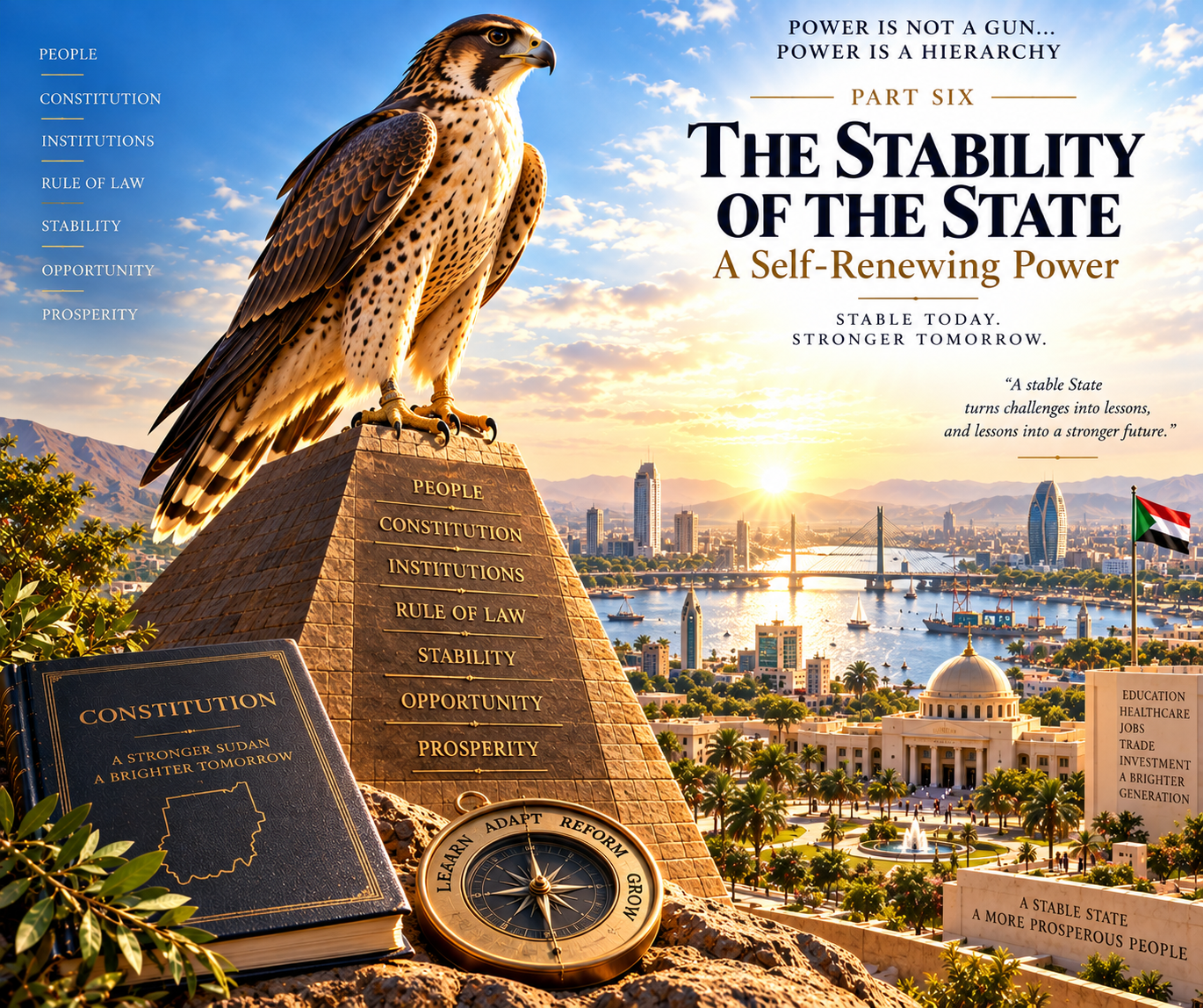
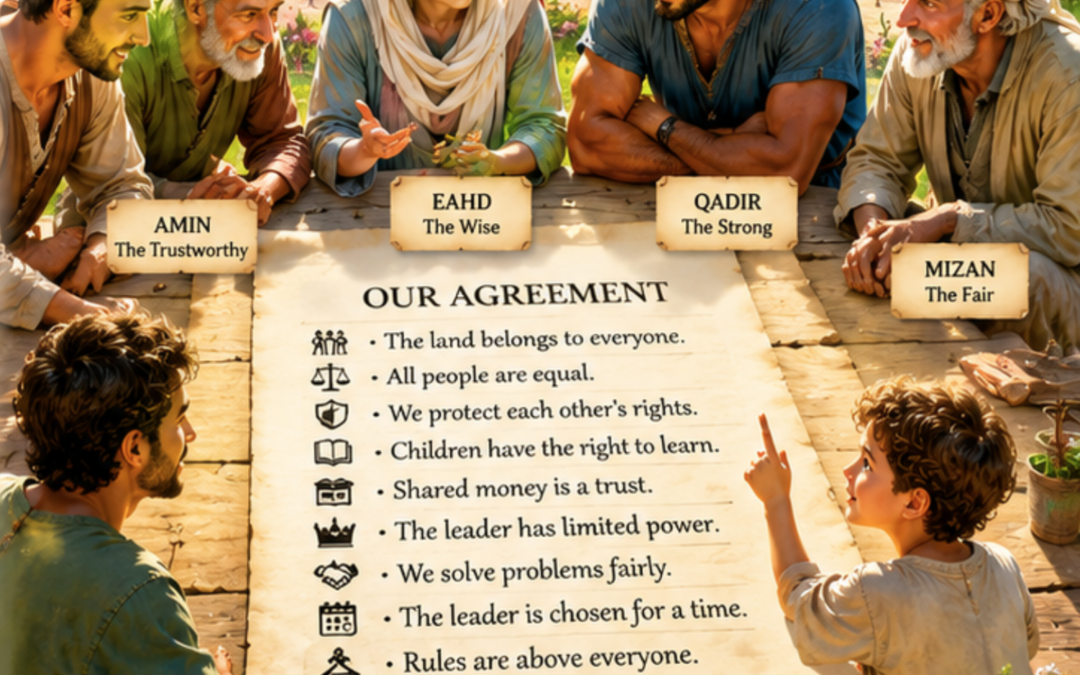
POWER IS NOT A GUN | POWER IS A HIERARCHY | PART ONE | THE SHIP THAT BUILT A NATION
Imagine a large trading ship setting sail with more than a hundred people on board — men, women and children.
The ship was also carrying cows, sheep and chickens, along with seeds, food supplies and tools for a long journey.
At first, everything went as planned.
Then the sea changed.
A violent storm struck. The waves rose, the ship was thrown off course, and its navigation and communication systems failed.
For days, the sea carried the ship wherever it pleased.
Nobody knew where they were. Nobody knew where they were going.
Then, one quiet morning after a terrible night at sea, the passengers woke to find that the ship had come to rest beside a vast and unfamiliar land.
They tried to repair it. Again. And again. But the ship would not sail.
They waited for rescue. One day passed. Then a week. Then several weeks. Nobody came.
Perhaps they were going to have to live there.
So they left the ship.
At first, they had no government, no courts and no laws.
They had something far more urgent to think about: survival.
They searched for water. They brought the cows, sheep and chickens ashore. They planted the seeds they had carried with them. They built simple shelters and shared what remained of their food.
Months passed. Then years.
The shelters became houses. A small market appeared. A school was built. Farms grew. People married.
Children were born who had never seen the ship sail and knew no other home but this land.
The place was no longer somewhere the sea had accidentally left them.
It had become home.
But as their new home grew, something else grew with it: disagreement.
One day, Amin and Hur argued over a piece of land.
Amin: “I’m the one who first planted it. So it belongs to me.”
Hur: “But you planted it using water from the well I dug. Does that make the land mine?”
The people around them looked at one another. Nobody knew who was right.
Then two traders argued over an unpaid debt. Another night, one of Mizan’s sheep disappeared. He accused his neighbour of stealing it. The neighbour denied everything.
Then came a more serious dispute.
Qadir owned more cattle than anyone else. He was physically strong and had several men who usually stood with him.
Qadir: “My cattle need more water than the others. I am taking the land around the well.”
Eahd: “Who gave you the right to do that?”
Qadir: “I have the largest herd, and I have enough men to protect it.”
Eahd: “I asked who gave you the right. I didn’t ask whether you were strong enough to do it.”
What are you able to do? — What do you have the right to do?
The crowd fell silent. Perhaps for the first time, the people understood that there was an enormous difference between those two questions.
Days passed. The disputes continued.
Then one evening, an argument in the market turned into a serious fight. Voices rose. Some men picked up sticks. Within moments, disagreement was close to becoming violence.
Amin: “Enough.”
He looked around at everyone.
Amin: “When we arrived here, we were passengers on a ship. Our only concern was staying alive. Look around you now. We have homes. We have farms. We have a market. We have a school. We have children who were born here.”
We are no longer passengers.
Amin: “We have become a community. But we have never agreed on how this community should be governed.”
Qadir: “That’s easy. We choose the strongest among us, and he becomes the leader.”
Eahd: “And if the strongest man is the one who wrongs me, who do I complain to?”
Qadir said nothing.
Another voice: “Then we choose the richest.”
Hur: “If money gives someone the right to rule us, why don’t we simply sell the whole country to whoever offers the highest price?”
Some laughed. But the question remained.
Mizan: “Then we choose someone we trust, and we give that person the power to manage our affairs.”
Many nodded. That sounded sensible. But Eahd was still not satisfied.
Eahd: “Fine. We give someone power. How much power?”
Eahd: “Can that person take my cow and give it to his brother?”
“No.”
Eahd: “Can he throw Hur out of his house because he doesn’t like him?”
“No.”
Eahd: “Can he allow his own children into the school but refuse to educate Mizan’s children?”
“Of course not.”
Eahd: “Can he take the money collected from the market and spend it on himself?”
The answer came loudly: “No!”
Eahd: “Then our problem is not simply deciding who will govern us.”
Amin: “Then what is the problem?”
Eahd: “We must also decide how that person may govern us, what powers we give him, and where those powers end.”
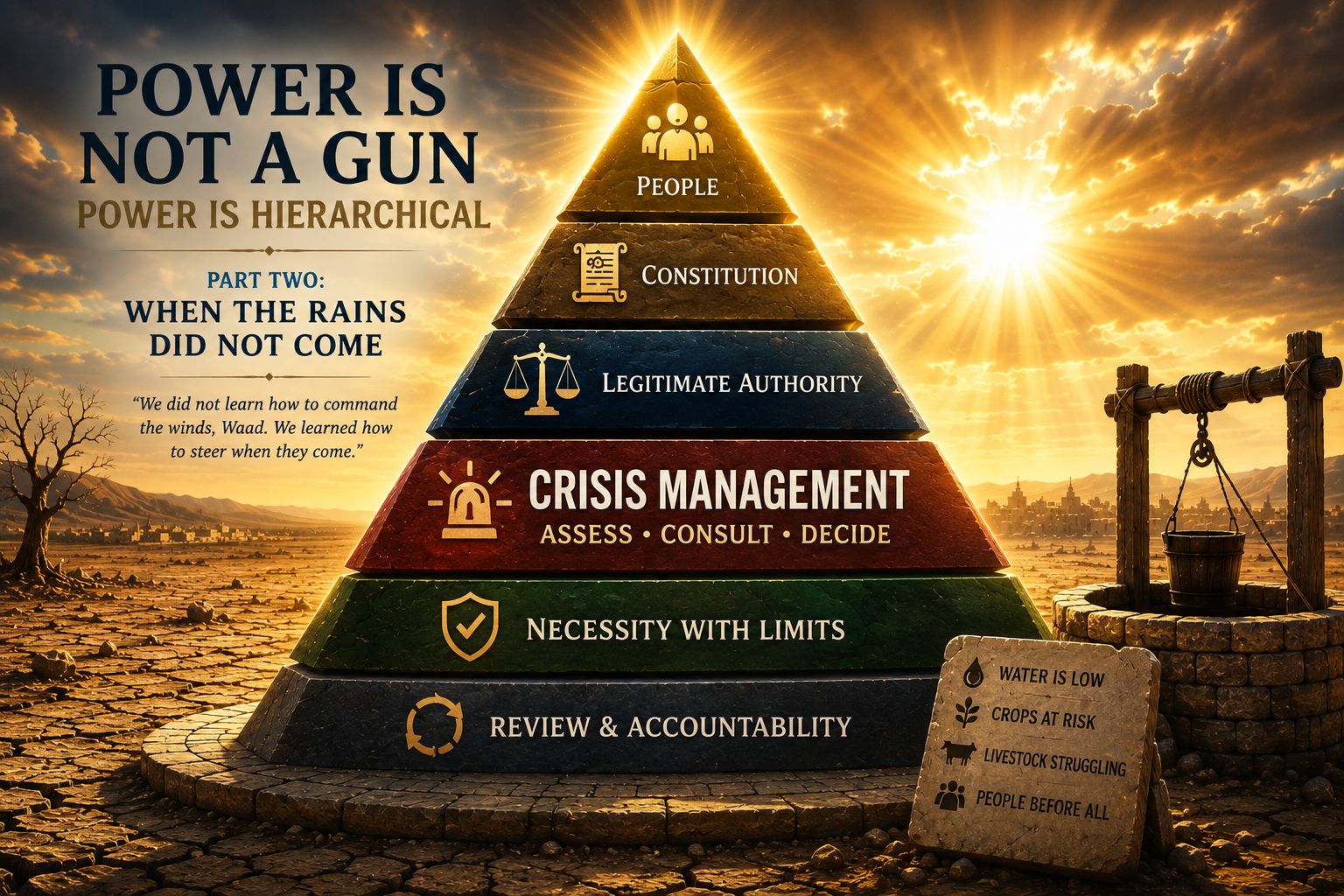
The person must never become greater than the rules.
That was the moment everything changed. They realised that choosing a leader was not enough.
- Who gives the leader the right to govern?
- What may the leader do?
- What must the leader never be allowed to do, however powerful he becomes?
- Who holds the leader accountable?
- Who protects the weak when the person causing the harm is the leader himself?
Hur: “Then we must agree on the rules before we choose the person.”
Eahd: “Yes. So that the person can never become greater than the rules.”
They met for days. They disagreed. They argued. They walked away. They came back. And eventually, they agreed.
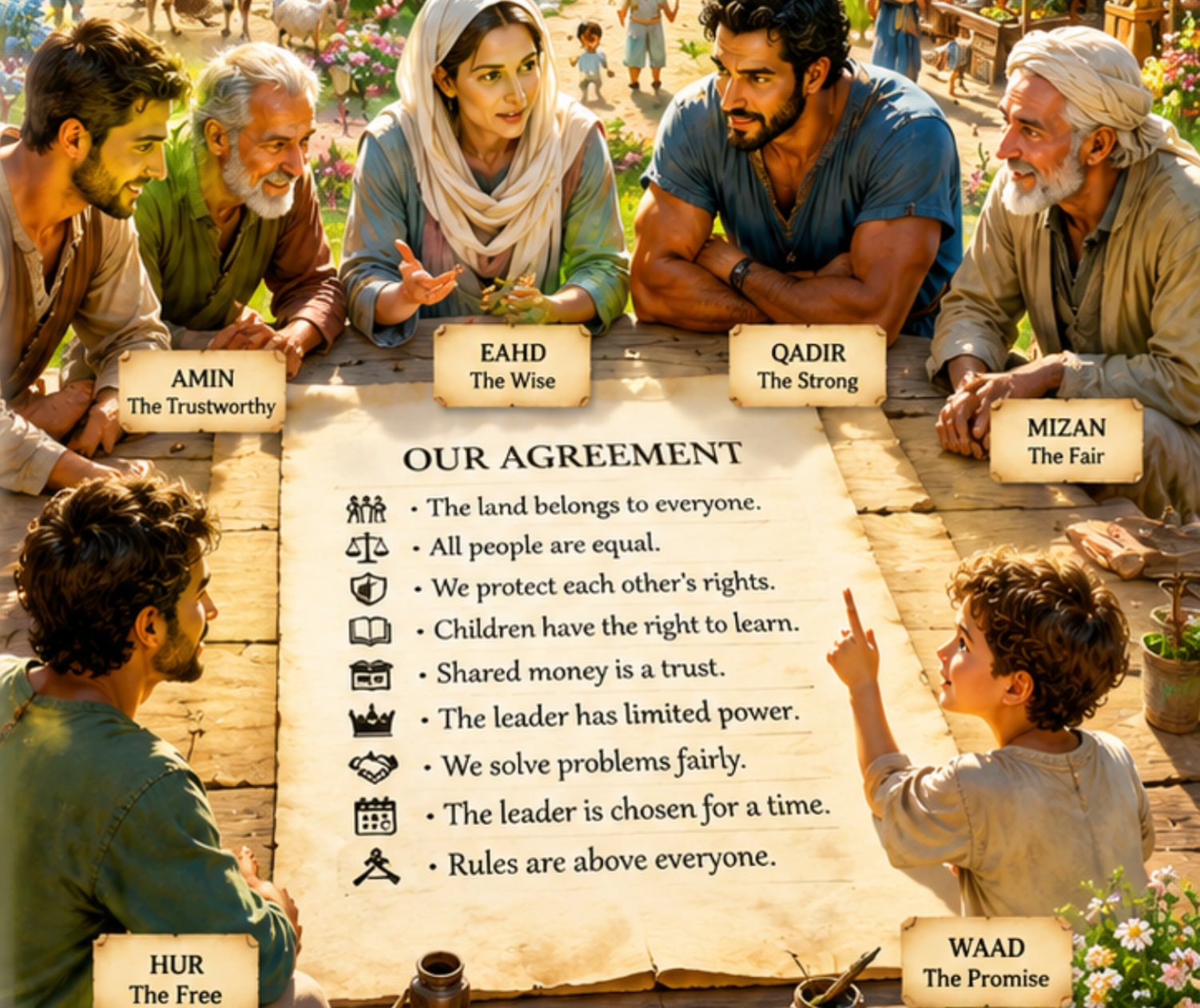
- This land belongs to all of us.
- Everyone who lives here must be treated equally.
- Nobody may take another person’s property without lawful justification.
- Nobody may be punished simply because the leader dislikes them.
- The school belongs to the children of everyone.
- Money collected from the community is held in trust. It is not the personal wealth of whoever governs.
- The person chosen to manage their affairs will have defined powers — not unlimited power.
- There must be an independent way of settling disputes, so that being the leader’s relative or friend does not make someone more powerful than another person.
They also agreed on how their leader would be chosen, how long the leader could remain in power, how the leader would be held accountable, and how another person could take over without every change of leadership becoming a battle.
After many days, they finally sat back and looked at what they had created.
Mizan: “We know what we agreed today. But what happens fifty years from now?”
Hur: “What if a future leader tells our children that their parents never agreed to any of this?”
The gathering became quiet.
Sitting nearby was a young boy named Waad. He had listened to the adults arguing for days without saying anything.
Waad: “Write it down.”
Everyone looked at him. Then they looked at one another. And they laughed — not because the idea was foolish, but because it was so simple that they wondered why none of them had thought of it.
So they wrote it down.
They wrote where power comes from, who may exercise it, what its limits are, and how it may be used.
They wrote what rights belong to the people and cannot simply be taken away by whoever happens to govern.
They wrote how the institutions managing their community would be created, how those exercising power would be held accountable, and how power would pass peacefully from one person to another.
They wrote how disagreements would be settled through agreed rules rather than everyone reaching for a stick whenever a dispute arose.
When they had finished, Eahd placed the document before them.
It was no longer just a collection of words on paper.
|
We gave you power, but we did not give you ownership of us. We gave you authority to manage our affairs; we did not give you authority to own our lives. Protect our land. Do not take possession of it. Protect our rights. Do not give them to those you favour and take them from those you dislike. Govern according to the rules we have agreed — and remember that those rules govern you too. |
But the document also spoke to the people themselves.
They too had made a promise: to live together, to respect one another’s rights, and to settle their disputes according to common rules rather than according to who was richer, stronger or surrounded by more men.
What they had created was a covenant.
A covenant between people about the country they shared. A covenant about how power would be created and exercised. A covenant that said political power was something entrusted to those who exercised it — not something they owned.
And young Waad’s simple suggestion ensured that the covenant would not belong only to those sitting around the table that day. It could be passed to their children, and to their children’s children.
A covenant for the present — and a promise to the future.
That covenant, when it becomes the highest set of rules governing a State; when it determines where political authority comes from, establishes institutions, limits the exercise of power and protects the fundamental rights of the people…
THE CONSTITUTION
And so, long before the people from the ship had an army, and before they made a single gun, they discovered the first secret of a strong State:
Know who power belongs to.
Know where it comes from.
Know why it is given.
And know where it must stop.
A State does not begin with a gun.
A State begins with a covenant.
Reference
The principle that the will of the people is the basis of governmental authority is reflected in Article 21(3) of the Universal Declaration of Human Rights, United Nations.