Beyond Oil Transit: A New Legal and Economic Framework for Sudan–SouthSudan Cooperation
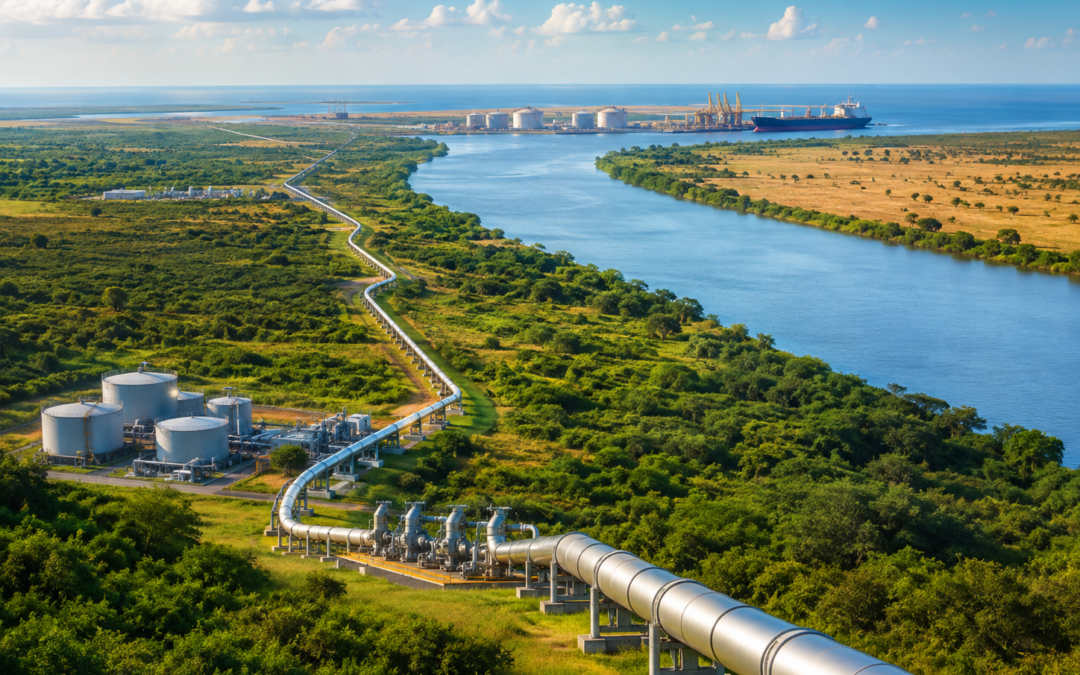
Sudan and South Sudan are politically separate states, but their economic futures remain connected by pipelines, ports and a shared dependence on oil. Geography has created an enduring reality: South Sudan possesses much of the oil, while Sudan controls much of the infrastructure required to transport it to international markets. Neither country can fully realise the value of these resources without the cooperation of the other. The question, therefore, is not whether the two countries should cooperate, but whether the legal and institutional framework governing that cooperation remains fit for purpose.
An Interdependence Created by Geography
Since South Sudan gained independence in July 2011, oil has remained among the most strategically important, and politically sensitive, issues in relations between Khartoum and Juba. A substantial proportion of the oil reserves and production lies within South Sudan. However, much of the infrastructure required to process, transport and export that oil, including pipelines, processing facilities and access to ports, is situated in Sudan. This arrangement has produced unavoidable economic interdependence. South Sudan requires reliable access to Sudanese infrastructure to reach international markets. Sudan, in turn, benefits from transit charges, processing fees and related services, which help offset some of the revenue it lost following the separation of the South. This mutual dependence should not be regarded as a weakness. Properly governed, it can become the foundation of a durable economic partnership. Without effective institutions and regularly reviewed agreements, however, the same interdependence can become a recurring source of disagreement and instability.
Agreements Made for a Different Era
Many of the arrangements governing oil cooperation were negotiated during the early years following South Sudan’s independence. The economic, political and commercial conditions in which they were concluded differ considerably from those prevailing today. Over the past decade, the international economy has been transformed by fluctuating oil prices, the COVID-19 pandemic, disrupted supply chains, rising operational costs and geopolitical conflicts that have placed energy security at the centre of international policy. At the same time, the global transition towards renewable energy and lower-carbon technologies is reshaping investment decisions across the energy sector. Oil-producing states must now consider not only immediate revenues but also the long-term commercial viability of their resources and infrastructure. Agreements should not be treated as permanent instruments incapable of adjustment. Sound legal and economic governance requires periodic review to ensure that contractual arrangements remain fair, workable and responsive to changed circumstances. For Sudan and South Sudan, such a review is not an invitation to abandon existing commitments. It is an opportunity to preserve cooperation by adapting its legal framework to contemporary realities.
Why the Joint Committees Matter
Renewing and strengthening the joint committees between Khartoum and Juba should be viewed as more than an administrative exercise. Properly constituted committees could provide the permanent institutional machinery required to manage a complex cross-border energy relationship. Effective joint committees could:
- Maintain regular technical and governmental dialogue;
- Oversee the implementation of existing agreements;
- Facilitate the exchange of operational information and technical data;
- Address maintenance, security and production concerns;
- Identify emerging disputes before they escalate;
- Develop coordinated responses to interruptions and emergencies;
- Recommend amendments where existing arrangements no longer reflect economic realities.
Their effectiveness would depend on clearly defined mandates, balanced representation, regular meetings and transparent procedures for reporting and decision-making. They should also include access to legal, technical, environmental and financial expertise. A relationship of this importance cannot safely depend on irregular negotiations triggered only when a crisis arises. It requires continuous institutional engagement.
A Legal Review for Economic Stability
A comprehensive review should examine more than the headline question of transit fees. It should consider the entire legal and commercial structure governing the production, processing, transportation and export of oil. Relevant matters may include:
- The calculation and periodic review of transit and processing charges;
- Responsibility for maintenance and infrastructure investment;
- Allocation of operational and security costs;
- Procedures for responding to damage, interruption or force majeure events;
- Environmental protection and liability;
- Measurement, inspection and verification mechanisms;
- Payment procedures and financial transparency;
- Applicable law and dispute-resolution arrangements;
- Protections capable of encouraging responsible long-term investment.
Transportation, maintenance, security and infrastructure costs have changed substantially since many of the original arrangements were concluded. A carefully negotiated review could establish a more balanced framework that protects the legitimate interests of both countries while supporting increased production and greater investor confidence. Legal certainty is particularly important in the energy sector, where investments are costly, technically complex and dependent upon long-term planning. Investors are more likely to commit capital where obligations are clearly defined, institutions function consistently and disputes can be resolved through credible procedures.
Cooperation Beyond Crude Oil
The economic relationship between Sudan and South Sudan should not remain confined to the transportation and export of crude oil.
Renewed joint committees could provide a platform for exploring wider cooperation in areas such as petrochemicals, refining, electricity generation, logistics, storage, transport and technical training. The countries could also examine opportunities for coordinated infrastructure development and regional energy links.
Such cooperation would allow both states to derive greater value from their natural resources rather than relying predominantly upon the export of raw materials. Processing and related industries can generate employment, develop technical expertise and create additional sources of public revenue. A broader economic partnership could also strengthen relations between the two countries. Shared infrastructure and commercial projects create practical incentives for stability, dialogue and the peaceful management of disputes.
From Crisis Management to Strategic Partnership
Sudan and South Sudan can no longer afford to manage their shared economic interests solely through negotiations conducted in response to emergencies. Crisis-driven engagement may produce temporary solutions, but it rarely creates the predictability required for sustainable development.
What is needed is a strategic framework founded upon regular dialogue, legal certainty, institutional accountability and long-term economic planning.
Renewing the joint committees and reviewing the existing agreements would represent an important first step. The process should be transparent, technically informed and guided by the principle that a fair and sustainable arrangement must protect the interests of both states. Oil may have been a source of tension since separation, but it can also become an instrument of cooperation. By modernising their legal arrangements, strengthening their joint institutions and expanding their partnership beyond the export of crude oil, Sudan and South Sudan could transform geographic necessity into economic opportunity. The pipelines connecting the two countries should carry more than oil. They should carry a shared commitment to stability, development and a more prosperous future for the peoples of both nations.
Contact Us
Disclaimer: Although you are invited to talk or contact us, we are unable to give legal advice in response to enquiries sent without acknowledged formal instructions and written confirmation from us. Please be informed that nothing on this website should be construed as legal advice.